Queen Nefertari was one of the most famous and powerful women of ancient Egypt. She was the wife of Ramesses II, one of the most powerful pharaohs in Egyptian history. She played a kind of major role in royal life, diplomacy, and the religious traditions of the 19th Dynasty, kind of like the whole court moved around her. Her beauty, smarts, and rank made her one of the most respected queens in all Egyptian history, really.
Today Queen Nefertari is remembered mostly for her stunning tomb in the Valley of the Queens and for that gorgeous temple that was dedicated to her at Abu Simbel. Her legacy keeps pulling in history lovers and travelers, who are eager to unearth those compelling stories behind ancient Egypt’s royal women.
Queen Nefertari was the Great Royal Wife of Ramses II, one of the strongest pharaohs of ancient Egypt, at least that’s how it’s usually said. She lived in the 13th century BCE, and over time she sort of became one of the most important voices at court, even if the details are a bit thin.
Although little is known about her early family background, historical records show that she held a highly respected position beside Ramses II. She took the pharaoh as her husband around 1254 BCE, and after that she became a central presence during royal rites, religious work, and even diplomatic dealings.
Queen Nefertari and Ramses II had six children, four sons and two daughters. Because her sway mattered so much, Ramses II arranged for a temple to be dedicated to her at Abu Simbel. The place sits beside his own grand temple, and it works like a clear sign of his esteem for her.
Queen Nefertari was more than just the wife of some powerful pharaoh. She really acted as an influential queen, and she helped keep things stable and respected in ancient Egypt, during the reign of Ramses II.
People often mention her intelligence as well as her elegance, and also her close link to Egyptian religion. In many ancient Egyptian images she shows up taking part in sacred events, and standing near Ramses II, which points to this important role she had in everyday royal life, not just in stories.
There is also a strong idea that she had an active hand in diplomacy. A few historians suggest she supported steady relations between Egypt and nearby kingdoms, so her standing grew as a political person and as a religious figure too.
After she died, around 1240 BCE, Ramses II honored her memory in a big way. He commissioned one of the most beautiful royal tombs ever made in ancient Egypt: Tomb QV66 in the Valley of the Queens.
Travelers who want to explore the legacy of Queen Nefertari can discover her remarkable tomb through Luxor Day Tours, which provide the chance to visit the Valley of the Queens along with other iconic landmarks such as the Valley of the Kings, Karnak Temple, and Luxor Temple. These tours offer a great way to experience the history, art, and royal heritage of ancient Egypt with expert guidance.
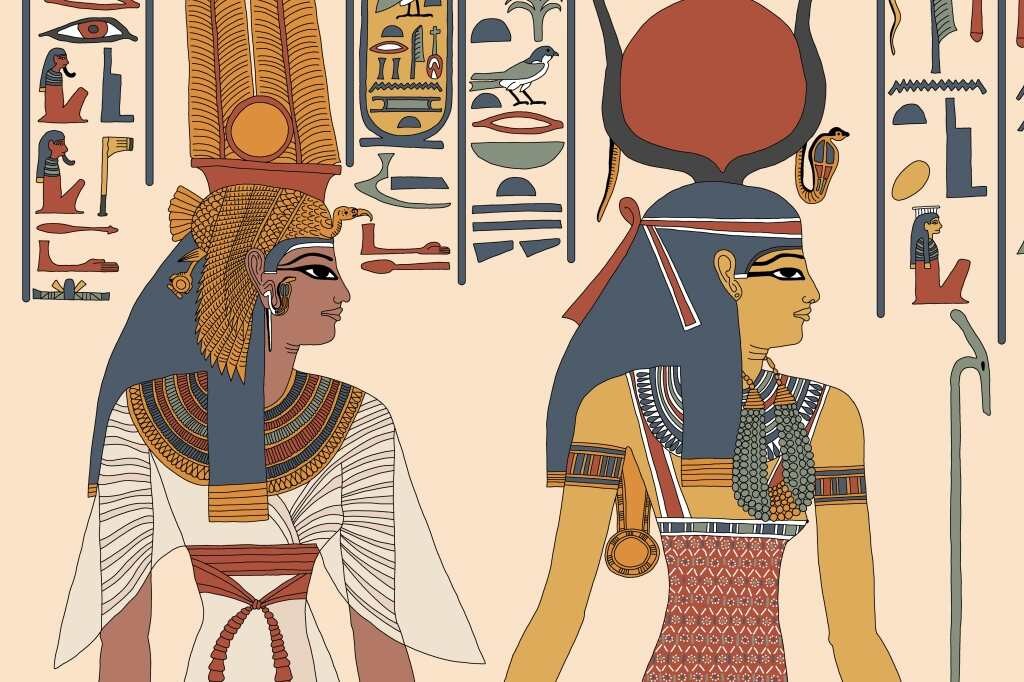
Queen Nefertari had multiple prestigious titles that really pointed to her remarkable position in ancient Egyptian life. In a way the titles made it obvious that she was more than “just” a royal wife, they also marked her as a religious authority and a clear sign of power.
Some of her most famous titles included:
The Great Royal Wife
Lady of the Two Lands
Beloved of Amun
Mistress of Upper and Lower Egypt
Daughter of Ra
God’s Wife
These titles demonstrate the respect and influence Queen Nefertari enjoyed throughout her lifetime. She was often represented in statues and temple reliefs wearing royal clothing and jewelry, highlighting her beauty and importance.
The ancient queen, Nefertari, is among the most intriguing of ancient Egyptian queens. Check out some of these cool facts about her:
She was the favorite wife of the greatest pharaoh of Egypt.
Ramses II built a special temple to her at Abu Simbel.
Her tomb, located in the Valley of the Queens, is one of the most beautiful in all of Egypt.
Her tomb also has some of the most well-preserved ancient Egyptian wall paintings in all of Egypt.
She had a key role to play in many royal and religious rituals.
Her name "Nefertari" translates to "Beautiful Companion," or, alternatively, to "Beautiful One has Come."
The Temple of Abu Simbel was built by Ramses II, to honor Queen Nefertari and the goddess Hathor. It sits in southern Egypt , close to the line with Sudan , so it feels kinda isolated and still very grand. This place is often named as one of the most impressive monuments from ancient Egypt, not just for its age but also for the sheer scale of it.
In the main area you’ll see statues of Ramses II along with Queen Nefertari. The queen is shown almost the same size as the pharaoh, which was kinda rare in ancient Egyptian art and it quietly signals her high standing in the court. Like , they really chose to make that point.
When you go inside, visitors can admire careful wall paintings, they show religious rituals, offerings given to the gods and also scenes that describe the royal couple’s bond with core ancient Egyptian beliefs. The images feel ceremonial, almost like a visual hymn.
The Abu Simbel Temple of Queen Nefertari is still a strong symbol of the respect Ramses II had for his wife ,and for how important her role was within Egyptian history.
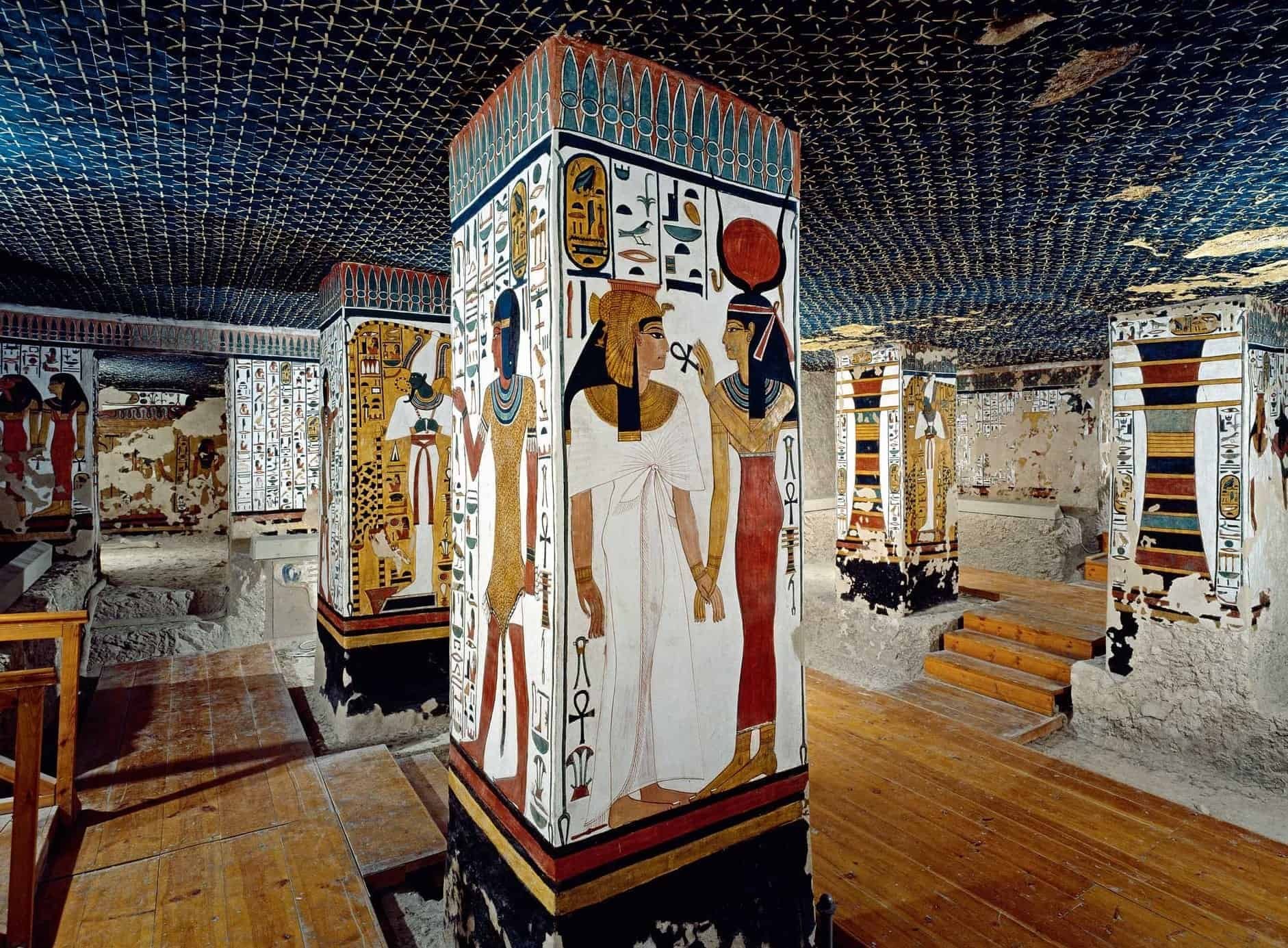
Queen Nefertari’s tomb is considered one of the most exquisite and well-preserved burial sites in all of ancient Egypt. Located in the Valley of the Queens, the tomb reflects her high status and her deep connection to religion and the afterlife. Nefertari was also known as a devoted supporter of art, culture, and monumental architecture.
The walls of her tomb are adorned with some of the finest surviving artwork from ancient Egypt. Brightly colored reliefs depict scenes from her life, religious ceremonies, and passages from sacred texts meant to guide her journey to the afterlife. Sculptures within the tomb portray Queen Nefertari in various roles, including queen, mother, and divine figure.
For travelers exploring Luxor, the tomb is often included in a Luxor West Bank Tour, making it easy to visit the Valley of the Queens together with several of the city's most important archaeological sites.
Visiting the tomb of Queen Nefertari offers a rare glimpse into the beauty, artistry, and spiritual beliefs of ancient Egypt. It allows readers and visitors alike to step back in time and appreciate the legacy of one of Egypt’s most remarkable royal women. Today, the legacy of Queen Nefertari continues to inspire history lovers and travelers interested in ancient Egypt and its monuments, often highlighted in cultural content related to Egypt tours.
Start From: 2250$
Start From: 5600$
Start From: 7500$
Start From: 9720$
Start From: 5550$
Start From: 9185$
Start From: 325$
Start From: 3210$
Start From: 140$
Learn about our latest news, promotions, and professional tips. Know before you book your next Egypt tours
Queen Nefertari was the Great Royal Wife of Pharaoh Ramses II and one of the most influential queens of ancient Egypt.
Queen Nefertari is buried in Tomb QV66 in the Valley of the Queens, located near Luxor, Egypt.
Ramses II built the temple at Abu Simbel to honor Queen Nefertari and show his respect for her importance as his wife and queen.
Her tomb is famous for its beautifully preserved wall paintings, detailed artwork, and exceptional artistic quality.
Yes, visitors can access the tomb when it is open, usually with limited entry to protect the ancient artwork.
Queen Nefertari continues to be admired more than 3,000 years after her lifetime because of her beauty, intelligence, influence, and remarkable legacy.