Where Is Minya?
El Minya, known as the Bride of Upper Egypt, is a historic city along the Nile, rich in archaeological and cultural heritage. It has played key roles since ancient times, spanning the Pharaonic, Greeco Roman, and Islamic eras.
The Travel Gap: It sits right between Cairo and Luxor, so most tourists skip it to go straight to the famous spots.
No Big Marketing: Travel agencies focus entirely on the Pyramids and Luxor, leaving Minya off the map.
Fewer Tourist Services: It lacks international luxury hotels, tourist restaurants, and easy public transport.
Spread Out Sites: Incredible places like Beni Hasan and Tell el Amarna are far apart and require private driving to reach.
No Nightlife: It is a traditional, local city without the tourist bazaars or evening shows found in resort towns.
Discover the Ancient City of (Akhenaton) Tell el Amarna
Built 1348 – 1344 BC
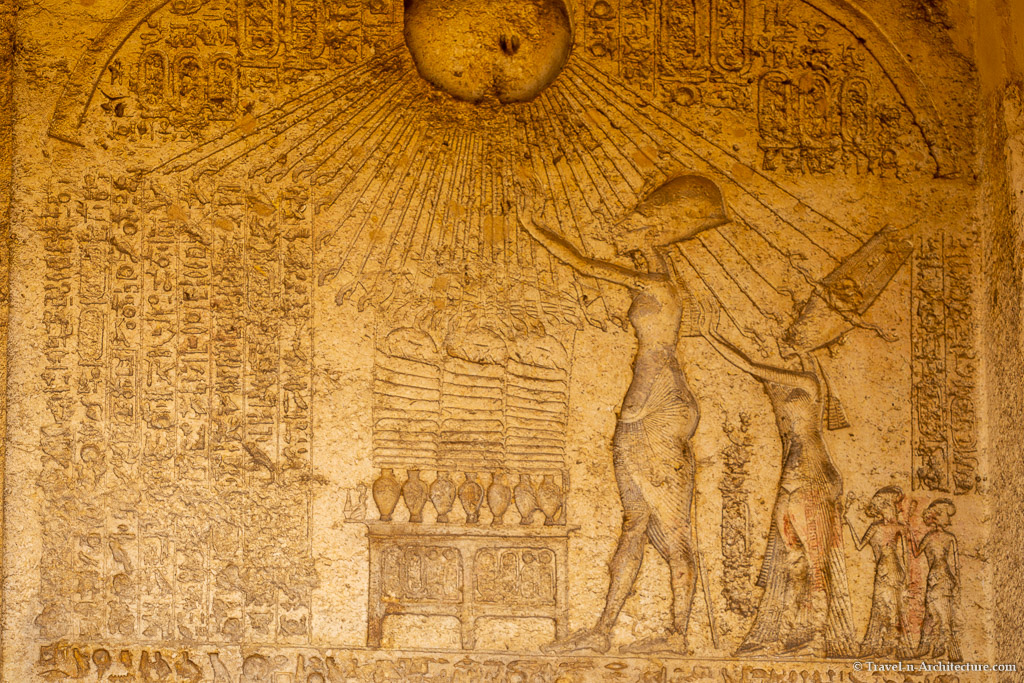
Akhenaten and Nefertiti Worshipping Aten
The ancient Egyptian city of Akhetaton, also called Tell el-Amarna or Amarna, was the capital city built by Pharaoh Akhnaton and abandoned shortly after his death (ca 1336 BC). It was here that he pursued his vision of a society dedicated to the cult of his one god the Aton.
A series of tablets carved in the face of the cliffs behind Amarna record the foundation of Akhnaton’s new capital city in his own words. He wrote that he was led there by his god Aton. He wanted a pristine location that had not been dedicated to other deities. Amarna is 194 miles (312 kilometers) south of Cairo and 250 miles (402 kilometers) north of Luxor. It is located on the east bank of the Nile.
The name Amarna comes from the Beni Amran tribe that lived in the region. Tell means “hill.” The ancient Egyptian name for the city was Akhetaton, which means “the Horizon of the Aton.” Today the city is, for the most part, covered with sand or badly eroded. None of the stonework of the temples or palaces survives, for they were removed after the Amarna Period.
Construction of the city started in year 5 of Akhnaton’s reign and was probably completed in year 9, although it became the capital city two years earlier. To speed up construction, most of the buildings were constructed out of mud-brick and white-washed.
With an emphasis on worship taking place toward the light in the sky (towards Akhnaton’s god, whose symbol was the sun), solar worship spaces typically dispensed with the roof. Therefore the main temples no longer needed massive blocks to bear heavy roofing stones. Egyptian architects switched to small blocks, called talatats, that characterize constructions of this period. A workman could easily carry one talatat under each arm. A central structure of Amarna was the Great Aton Temple. This entire temple was open to the sky.
Reliefs, statues, and mosaics decorated all the temples and palaces. Many scenes in the Amarna tombs depicted the Royal Family, which consisted of Akhnaton, Nefertiti, and up to six daughters.
Not only was Akhetaton the center for worship of the Aton and the dwelling place of the king, this new city that was created in just four years became the home of an estimated 30,000 people.
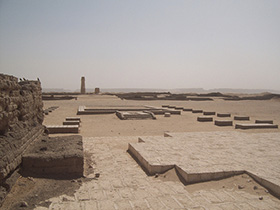
The small Aton temple at Tell el-Amarna.
Explore the Remarkable Tombs of Beni Hasan
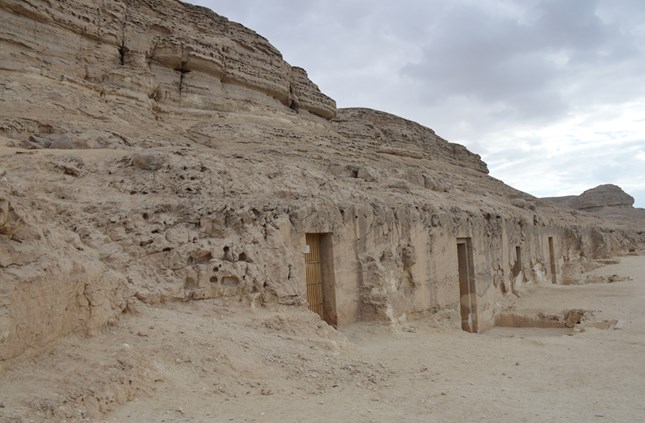
The Beni Hasan cemetery is located in one of the most fertile regions of Egypt. This site includes some of the most impressive tombs of the Middle Kingdom. Its rich and well preserved tombs attest the economic prosperity that it enjoyed.
The tombs are located in two distinct areas: the upper and lower cemeteries. The lower cemetery contains around 800 tombs, many of them shaft tombs. It mostly contains tombs of various officials from the First Intermediate Period (c.2181–2055 BC) to the Middle Kingdom (c.2055–1650 BC), but late Old Kingdom (c.2345–2181 BC) tombs, like Ipi’s, have also been discovered. The upper cemetery includes 39 rock-cut tombs, which were cut horizontally into the rock face of the cliffs. The walls of 12 of these tombs are decorated with beautifully painted scenes depicting activities of daily life, from agriculture and crafts to hunting and playing games, and also war and the arrival of foreigners on Egyptian lands.
The tombs of the upper cemetery are a testament to the ancient Egyptians’ architectural skills. They were cut into the rock with great accuracy using simple tools like chisels with bronze blades, which were struck with wooden mallets. The tombs are the final resting places of the senior officials of this region, the 16th Upper Egyptian province, which was known as the Oryx nome. They date to the 11th and 12th Dynasties of the Middle Kingdom (c. 2055–1795 BC). The repetition of names like Baqet, Khety, and Khnumhotep through a number of generations suggests that many of the owners of these tombs were related.
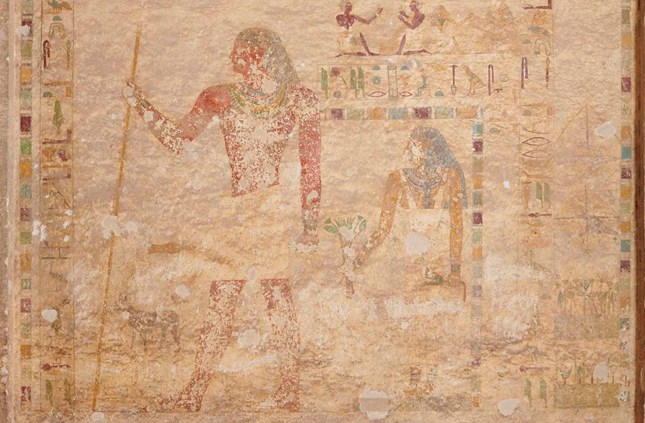
The Tomb of Khety
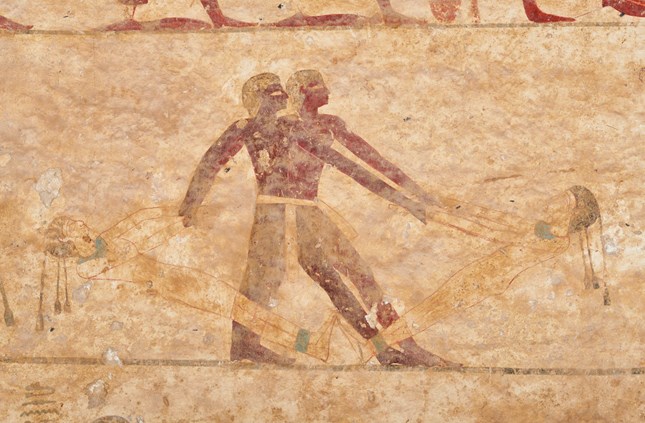
The Tomb of Baqet III
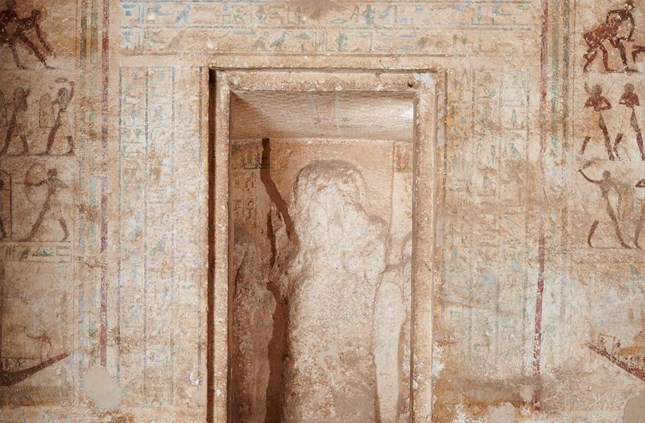
The tomb of Amenemhat
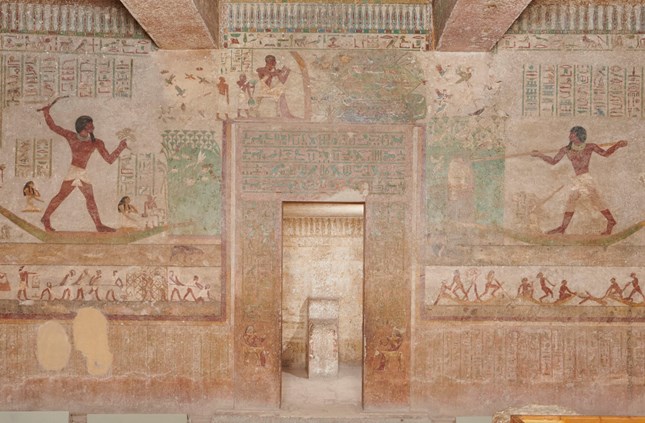
The Tomb of Khnumhotep II
Tuna El-Gebel: One of Egypt's Best Kept Secrets
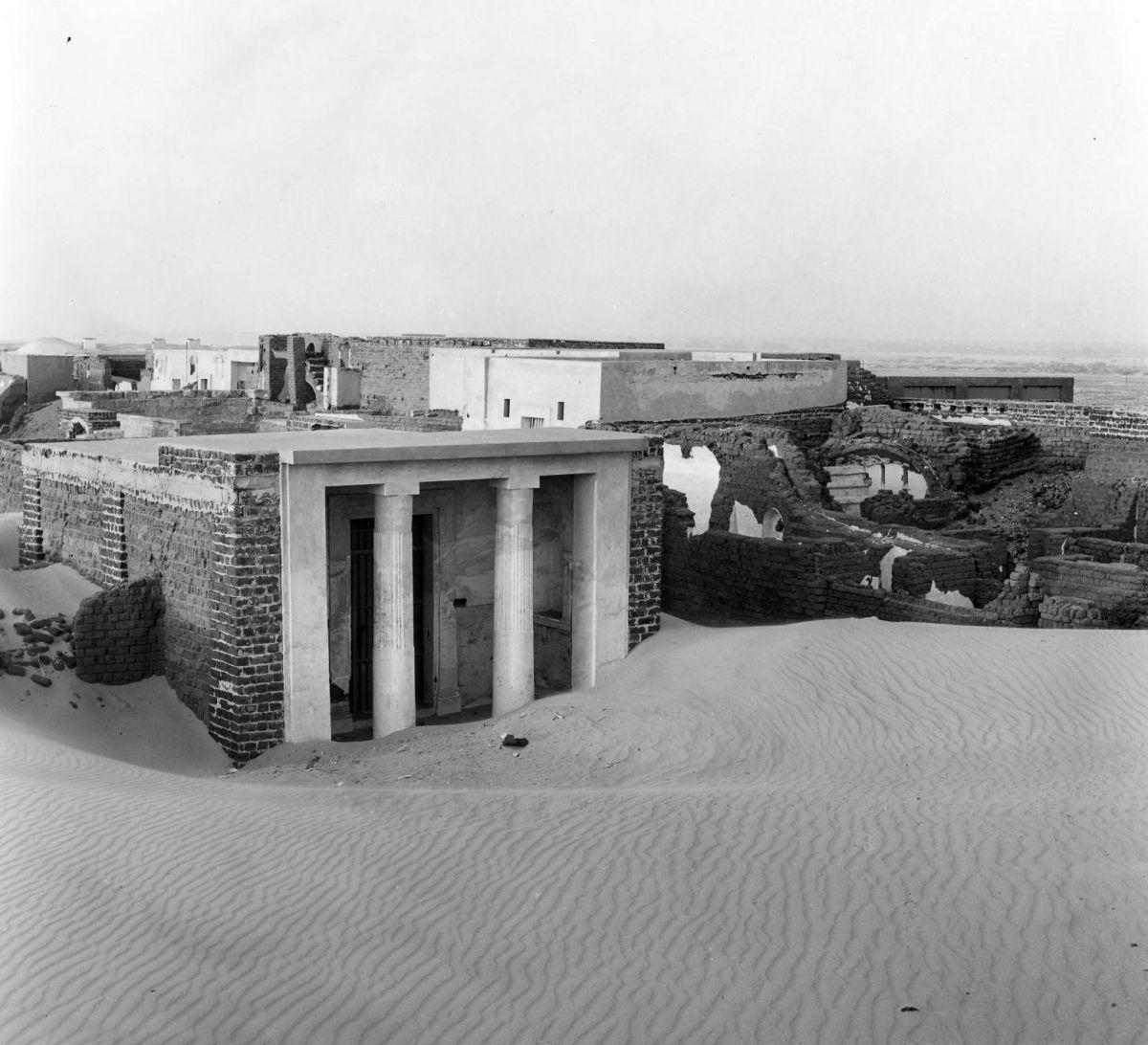
Tuna el Gebel, Petosiris Necropolis
Temples, houses, and tombs, animal worship and human necropolis – Tuna el Gebel is a fascinating site located about 270 km south of Cairo and 10 km west of the ancient city of Hermopolis Magna, a metropolis of Middle Egypt. For more than 100 years archaeologists have attempted to discover the secrets in the sand of the desert. Most of the buildings belong to the Ptolemaic and Roman periods between 300 BC and 300 AD.
Some of the tomb houses excavated by Sami Gabra as well as their associated parts of buildings with wall paintings, photographically documented by Bernd Harald Krause, are now digitally available as datasets in Arachne.
To the south of the site a large cemetery is located, the so-called Petosiris Tuna el Gebel, Petosiris necropolis, Tuna el Gebel. After the erection of cult sites for the god Thoth, especially active during the Ptolemaic period, around 300 BC the first tombs were erected in this area. Built of local shell-limestone and having a temple-like structure, the excavator Sami Gabra called them temple tombs The most famous being the tomb of Petosiris, a Lesonis priest of the god Thoth.
The early Roman period if not before, saw the building of the first mud brick tombs at the site called house tombs´ according to the material and the design. While the stone tombs had one story only, the later tombs built of mud brick had up to four different levels constructed one after the other. Not only is the horizontal expansion interesting, but also the vertical development of the necropolis is extraordinary. The material turn in Tuna el Gebel is marked by the change from stone to mud brick used for the later buildings, obviously a lower cost alternative compared to stone monuments.
As a result of the new building technique, the accumulation of tombs in the cemetery increased, and more and more people were buried here. Instead of stone monuments for a single person of high social rank, the mud brick buildings now offered a cheaper (and faster) alternative, with burial space for numerous individuals. Therefore the use of different building material not only had a religious significance but also a social one. As a consequence, the necropolis developed in a city-like layout from north to south, with the tomb of Petosiris at its core.
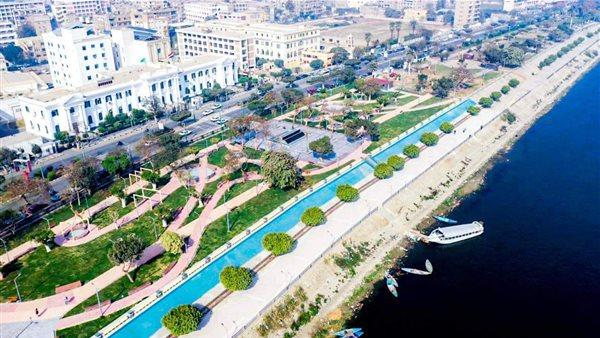
The Nile River is the heart of life in Minya, shaping the region's history, culture, and agriculture for thousands of years. Its fertile banks support local communities and create beautiful landscapes that attract visitors seeking an authentic Egyptian experience.
The Minya Corniche stretches along the Nile and offers stunning views of the river, especially during sunrise and sunset. It is a popular place for walking, relaxing, and observing daily life, with traditional feluccas, local fishermen and families enjoying the riverside atmosphere.
Together, the Nile and the Corniche showcase a peaceful and less-crowded side of Egypt, allowing travelers to experience the natural beauty and local charm of the country beyond its famous tourist attractions.
Ready to Explore Egypt Beyond the Tourist Trail?
While destinations like Cairo, Luxor, and Aswan often steal the spotlight, Minya offers something truly special an authentic journey through Egypt's rich history, remarkable archaeology, and everyday local life. From the lost capital of Akhenaten at Tell el Amarna and the beautifully preserved tombs of Beni Hasan to the fascinating necropolis of Tuna El-Gebel and the tranquil beauty of the Nile Corniche, Minya reveals a side of Egypt that many travelers never get to experience.
For those seeking hidden treasures beyond the traditional tourist trail, Minya is a destination that rewards curiosity and offers unforgettable cultural encounters.
Ready to discover Egypt's best kept secret? Let Your Egypt Tours create a seamless and enriching travel experience tailored to your interests. Whether you're passionate about ancient history, archaeology, or authentic local culture, our expert guides and customized itineraries will help you uncover the wonders of Minya and beyond.
Book your Minya adventure with Your Egypt Tours today and experience the hidden heart of Egypt.
Learn about our latest news, promotions, and professional tips. Know before you book your next Egypt tours
Egypt offers some of the best tours in the world, combining history, culture, and natural beauty. From exploring the Great Pyramids and the Egyptian Museum in Cairo to sailing on a luxury Nile cruise between Luxor and Aswan, every experience is unforgettable. You can also enjoy relaxing beach escapes in the Red Sea or discover ancient wonders on tailor-made Egypt tours that suit every traveler’s interests.
Your Egypt Tours is one of Egypt’s leading and most trusted travel agencies, known for its personalized service and expert care. As a top-rated company for Egypt tour packages, we ensure every Egypt trip is safe, seamless, and unforgettable, offering competitive prices, excellent customer service, and the highest standards of quality. With us, you’re always in good hands.
The average cost of a one-week trip in Egypt is around 1600 USD, including visits to tombs, temples, and a Nile cruise. Prices vary depending on the Egypt tours and the level of luxury you choose.
It’s not recommended to drink tap water in Egypt, as it’s highly chlorinated and may cause stomach issues for travelers. During your Egypt tours, it’s best to drink bottled water and use tap water only for washing or brushing your teeth.
The best time to enjoy Egypt tours is from September to March, when the weather is mild and pleasant. During these months, temperatures are ideal for sightseeing and Nile cruises. Summer (May to September) can be very hot, but it’s also a good time for budget travelers.
Egypt is generally hot and sunny most of the year, with winter falling between November and January, and summer peaking from June to August. Winters are mild, while summers can get very hot, especially in Luxor and Aswan. The pleasant weather from September to March makes it the best time to enjoy Egypt tours and explore the country's top attractions comfortably.
Yes, Egypt is a very safe country to visit, with a low crime rate and strong security measures in all tourist areas. The government ensures that accommodations and attractions remain clean and well-monitored for travelers’ comfort. When you book Egypt tours, you’ll find professional guides and organized arrangements that make your trip worry-free and enjoyable.
Egypt offers adventures for every traveler. Explore the majestic Pyramids of Giza, sail along the Nile on a Luxury cruise between Luxor and Aswan, and discover ancient temples and tombs that tell the story of the Pharaohs. Dive or snorkel in the Red Sea at Hurghada and Sharm El Sheikh, or enjoy a relaxing beach escape. Book one of our Egypt tours to experience the perfect mix of history, culture in one unforgettable journey.
Yes, you can, summer is still a great time to explore Egypt! While temperatures can rise to around 45°C, seaside resorts like Hurghada, Sharm El Sheikh, and Marsa Alam offer refreshing escapes with diving and snorkeling opportunities. Sightseeing in the early morning or evening helps you avoid the midday heat. Summer also brings great deals on hotels and services, making it ideal for travelers on a budget. Whether you’re seeking relaxation or adventure, Egypt tours during summer can still be an enjoyable and memorable experience.
Egypt has a modest dress code, especially for women, since it’s a Muslim country. Light, comfortable clothing is fine, but avoid short shorts or skirts. When visiting religious sites, cover your shoulders and knees. During Egypt tours, you can dress casually and comfortably; formal wear is optional unless you want to make your Nile cruise dinner extra special.
You can easily obtain a visa upon arrival at Cairo Airport, the process is simple for USA, UK, Canadian, Australian, and European citizens. The visa costs $25 USD and can be purchased at the visa office before immigration. You can also apply for an E-Visa through the official portal: www.visa2egypt.gov.eg. During your Egypt tours, our team can assist you with all visa-related inquiries to make your arrival smooth and stress-free.
Your Egypt Tours travel agency recommends two weeks so that you can enjoy the temples and tombs of Luxor and Aswan, explore the sights of Cairo, and relax in the Red Sea islands and nature reserves.
The best Egypt Nile River cruise depends on your preferences, budget, and how many nights you wish to spend on board. For a truly unforgettable experience, we recommend a 5-star luxury Nile cruise that offers exceptional comfort and service. If you prefer a more private and intimate journey, choose a Dahabiya Nile cruise, ideal for small groups of around 15 people. For adventurous travelers, the traditional Felucca boats provide a simple and authentic way to sail the Nile during your Egypt tours, though they offer fewer amenities.
The best time to visit Egypt is generally from October to April where it is suitable for outdoor activities and sightseeing.
Egypt travel usually have guided tours to archaeological sites, museums, and historical landmarks. Also have optional activities may include hot air balloon rides over Luxor, snorkeling in the Red Sea, or desert safaris.