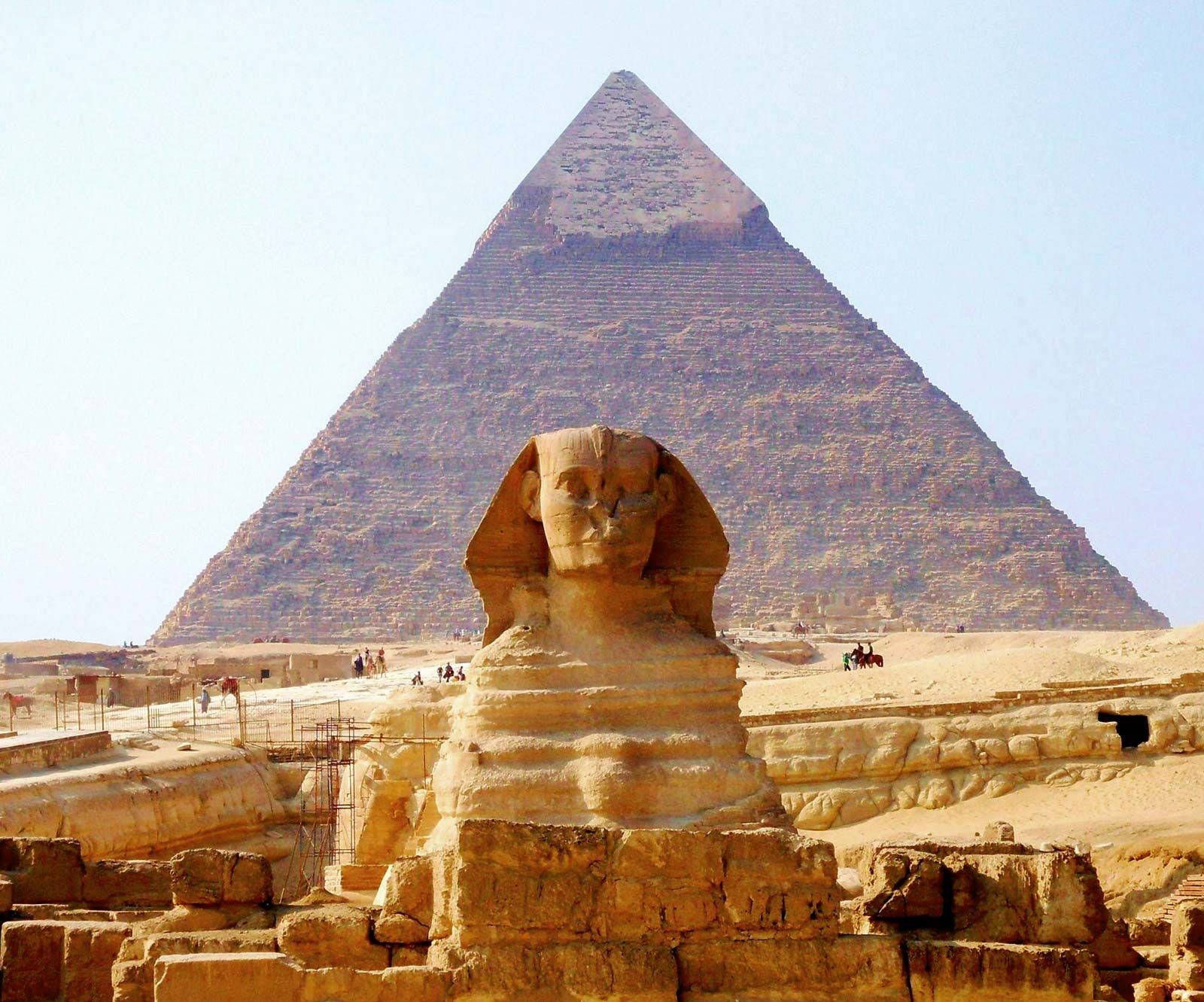
Los monumentos del Antiguo Egipto están entre los lugares más fascinantes del mundo. Su atractivo no solo reside en su magnífica arquitectura y su profunda historia, sino también en los muchos mitos y leyendas que los han rodeado durante siglos. Entre la realidad y la ficción, la curiosidad sigue siendo la principal razón por la que millones de turistas visitan Egipto para descubrir los misterios de su civilización.
Lo que hace que los monumentos egipcios sean especialmente poderosos en la imaginación humana es la forma en que difuminan la línea entre lo explicable y lo misterioso. A diferencia de las ruinas de otras partes del mundo, los monumentos de Egipto no solo son antiguos, sino que son monumentales en escala, simbólicos en su significado y sorprendentemente bien conservados. Para los visitantes antiguos, los viajeros medievales y los observadores modernos, estas estructuras parecían demasiado perfectas, demasiado masivas y demasiado matemáticamente precisas para ser logros humanos comunes. Esta percepción abrió la puerta para que florecieran las leyendas.
Uno de los mitos más antiguos registrados en la historia proviene de los historiadores griegos que visitaron Egipto miles de años después de la construcción de las pirámides. Incapaces de comprender completamente los métodos de ingeniería, algunos asumieron que existió intervención divina o tecnologías antiguas olvidadas. Con el tiempo, estas primeras especulaciones evolucionaron hacia relatos medievales que afirmaban que gigantes o civilizaciones míticas habían construido los monumentos. En la era moderna, tales historias se transformaron en teorías sobre extraterrestres. Cada generación remodeló el misterio según su propia imaginación y creencias.
Otra famosa leyenda es la llamada “maldición del faraón”, la idea de que cualquiera que perturbe una tumba real sufrirá infortunios. Estos mitos se hicieron muy conocidos después del descubrimiento de la tumba de Tutankamón en 1922, cuando varios miembros del equipo de excavación murieron años después por causas no relacionadas. Los periódicos exageraron estos eventos, creando titulares sensacionalistas que se difundieron por todo el mundo. En realidad, no hay evidencia científica que respalde la existencia de ninguna maldición, sin embargo, la historia persiste porque añade drama y suspenso a la historia.
La leyenda también creció a partir del arte simbólico. Las paredes de los templos egipcios están cubiertas con relieves de dioses, criaturas híbridas y escenas cósmicas. Para los antiguos egipcios, estas imágenes representaban creencias religiosas y filosofías sobre la vida, la muerte y el universo. Pero los observadores posteriores, que no comprendían el lenguaje simbólico, a veces las interpretaron de manera literal, suponiendo que representaban seres sobrenaturales reales o conocimientos ocultos. En realidad, eran textos visuales, un lenguaje sagrado de símbolos más que registros de eventos físicos.
También existe una razón psicológica por la que los mitos prosperan alrededor de los monumentos egipcios. Los humanos buscan naturalmente historias que expliquen lo que los asombra. Cuando una estructura parece demasiado extraordinaria, la gente a menudo asume una explicación igualmente extraordinaria. Este fenómeno no es exclusivo de Egipto; sus monumentos son tan impresionantes que amplifican este instinto más que casi en cualquier otro lugar del planeta.
La verdad más profunda es que los mitos en sí mismos son parte del legado de los monumentos. No revelan secretos sobre las pirámides, templos o estatuas, sino secretos sobre la imaginación humana. Las leyendas muestran cómo cada cultura que se encontró con Egipto proyectó sus propios miedos, creencias y sueños en estas antiguas piedras. En ese sentido, los mitos no son obstáculos para entender la historia, sino evidencia de lo profundamente que estos monumentos han inspirado a la humanidad a lo largo del tiempo.
En última instancia, la verdadera maravilla de los monumentos egipcios no es que sean misteriosos. Es que son comprensibles. La arqueología sigue desvelando cómo fueron construidos, quién los construyó y por qué. Cuanto más aprendemos, más claro se vuelve que su mayor secreto no es la magia o el mito, sino la extraordinaria capacidad de la civilización humana hace miles de años.
Algunas personas creen que las pirámides fueron construidas con la ayuda de extraterrestres debido a su diseño preciso y las enormes piedras que las componen. Sin embargo, las investigaciones arqueológicas confirman que fueron construidas por hábiles trabajadores egipcios antiguos utilizando técnicas de ingeniería avanzadas y un sistema de trabajo altamente organizado. Esto demuestra un logro humano extraordinario que no necesita explicaciones míticas.
Vamos a explicar lo que quiero decir:
Durante siglos, los monumentos egipcios antiguos, especialmente las pirámides, han inspirado mitos que afirman que fueron construidos por fuerzas sobrenaturales, civilizaciones perdidas o incluso extraterrestres. Estas teorías se hicieron populares principalmente porque la gente luchaba por entender cómo estructuras tan masivas pudieron ser construidas hace miles de años sin máquinas modernas. Sin embargo, la arqueología, los estudios de ingeniería y los descubrimientos históricos nos dan hoy pruebas claras de que los humanos, y no los extraterrestres, las construyeron, y lo hicieron utilizando trabajo organizado, inteligencia y planificación avanzada.
Uno de los monumentos más famosos, las Gran Pirámide de Giza, fue construida alrededor del año 2560 a.C. durante el reinado de Khufu en la meseta de Giza. Los arqueólogos descubrieron pueblos de trabajadores cerca de las pirámides que contenían panaderías, dormitorios, herramientas e incluso instalaciones médicas. Esto prueba que los constructores no eran esclavos ni seres misteriosos: eran hábiles trabajadores egipcios que vivían allí de manera estacional y recibían su paga en forma de comida, ropa y respeto.
Evidencia de ingeniería que explica los métodos de construcción. Los egipcios utilizaron:
De hecho, las inscripciones encontradas dentro de los bloques de las pirámides incluyen grafitis de los trabajadores, como nombres de equipos como "Los amigos de Khufu". Los extraterrestres no dejarían bromas humanas ni firmas de grupos de trabajo, ¡pero los trabajadores sí!
Entonces, ¿por qué existen teorías sobre extraterrestres?
Principalmente porque los logros antiguos desafían las suposiciones modernas. A veces, se subestiman las civilizaciones antiguas, suponiendo que la sofisticación tecnológica solo pertenece a las sociedades modernas. Cuando algo parece demasiado avanzado, la imaginación llena el vacío con mitos. Pero la historia demuestra que la ingenio humano siempre ha sido poderoso.
La verdadera historia es aún más impresionante que el mito: las pirámides no son evidencia de extraterrestres, sino prueba de la brillantez humana, la organización y la determinación.
El descubrimiento de la tumba del rey Tutankamón estuvo vinculado a la famosa “Maldición de los Faraones”, que supuestamente trajo mala suerte a cualquiera que la abriera. En realidad, la mayoría de los miembros del equipo de excavación vivieron largas vidas. Los historiadores creen que la historia de la maldición fue, en gran parte, una exageración mediática pensada para atraer atención y crear emoción.
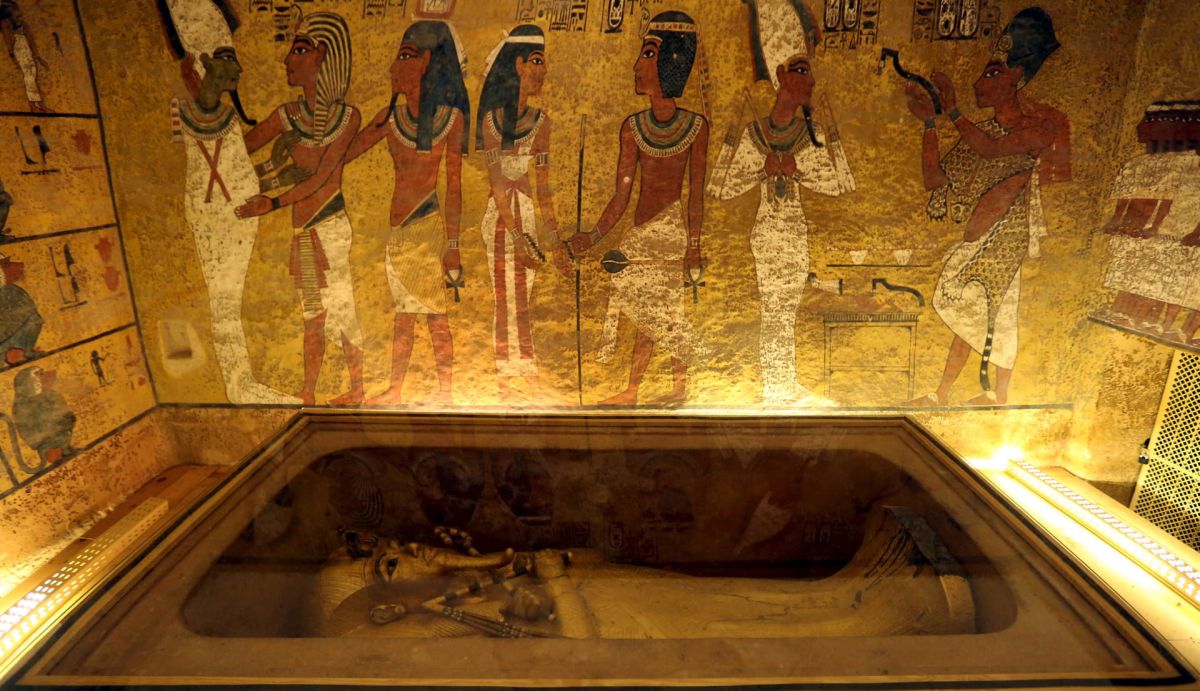
La leyenda comenzó poco después de que se abriera la tumba en 1922, cuando Lord Carnarvon, el patrocinador financiero de la expedición, murió inesperadamente por la picadura infectada de un insecto. Aunque los médicos explicaron claramente la causa médica, los periódicos de todo el mundo rápidamente relacionaron su muerte con una supuesta maldición antigua. Los titulares sensacionalistas describían coincidencias inquietantes, misteriosas advertencias y fuerzas sobrenaturales que protegían el lugar de descanso del faraón. Estos informes dramáticos capturaron la imaginación del público y transformaron un descubrimiento arqueológico rutinario en un misterio global.
En realidad, los registros arqueológicos cuentan una historia muy diferente. El hombre que lideró la excavación, Howard Carter, vivió muchos años después de entrar en la tumba, al igual que la mayoría de los miembros del equipo que trabajaron en el sitio. La investigación histórica cuidadosa muestra que no hubo un patrón inusual de muertes entre los involucrados. La llamada maldición existió principalmente en las historias de los periódicos y no en evidencia documentada.
Algunos estudiosos han sugerido explicaciones científicas sobre por qué el mito sonaba creíble. Las tumbas selladas pueden contener polvo antiguo, bacterias o moho que, en casos raros, pueden causar enfermedades, especialmente en ambientes mal ventilados. Sin embargo, nunca ha habido pruebas concluyentes de que tales factores causaran las muertes vinculadas a la leyenda de la maldición. La teoría sigue siendo especulativa y no apoya la narrativa dramática promovida por los primeros informes mediáticos.
Otra razón por la que la historia se propagó rápidamente fue el malentendido generalizado de las inscripciones en las tumbas egipcias antiguas. Algunas paredes de tumbas contienen textos simbólicos destinados a proteger espiritualmente al difunto en el más allá. Estas eran fórmulas religiosas, no amenazas. Los lectores posteriores a veces las interpretaron erróneamente como advertencias literales para los intrusos, lo que reforzó la ilusión de una maldición.
Psicológicamente, la idea de una maldición atraía a las personas porque satisfacía una profunda fascinación por los lugares prohibidos y los secretos antiguos. La noción de que perturbar la tumba de un faraón podría desatar un castigo sobrenatural aumentaba el drama, la tensión y el suspenso de la historia. Convirtió la arqueología, una disciplina científica, en algo que se sentía como un relato de aventuras.
Irónicamente, la leyenda logró algo notable: convirtió a Tutankamón en el faraón más famoso de la historia moderna. Antes del descubrimiento de su tumba, era un gobernante relativamente menor y poco conocido. Después, su nombre se hizo reconocido a nivel mundial, demostrando cómo los mitos pueden, a veces, moldear la memoria pública de manera más poderosa que los hechos históricos.
En última instancia, la "maldición de los faraones" no es un hechizo antiguo preservado desde la antigüedad, sino una leyenda moderna creada por la coincidencia, el relato mediático y el amor perdurable de la humanidad por el misterio.
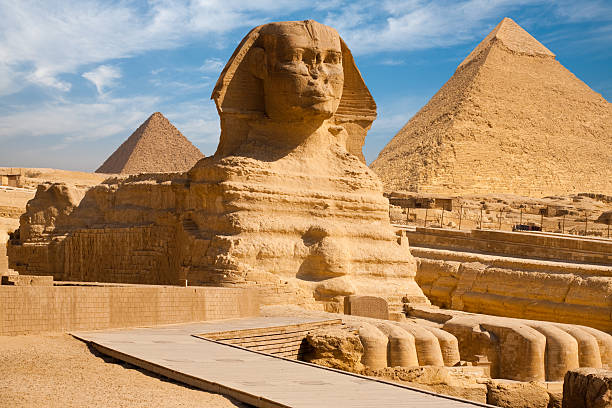
Una historia popular afirma que los soldados de Napoleón dispararon cañones a la nariz de la Esfinge; sin embargo, los dibujos hechos siglos antes de la llegada de Napoleón ya muestran a la Esfinge sin su nariz. Esto demuestra que la historia es simplemente una leyenda muy extendida y no un hecho histórico.
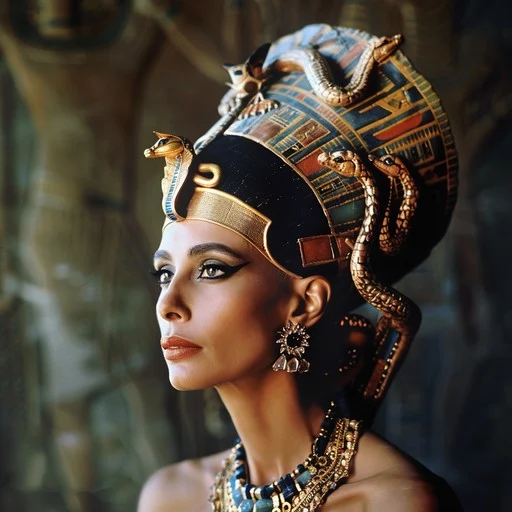
Cleopatra a menudo es descrita como la mujer más hermosa de la historia. Sin embargo, las fuentes históricas sugieren que su verdadero poder provino de su inteligencia, educación y extraordinario carisma. Sus habilidades políticas y su fuerte personalidad fueron las verdaderas razones por las que se convirtió en una de las reinas más famosas de todos los tiempos.
Los historiadores sugieren varias razones por las que los mitos se han propagado alrededor de los sitios antiguos:
En última instancia, la civilización egipcia antigua sigue siendo una mezcla única de realidad asombrosa y leyenda cautivadora. Tal vez su verdadera magia radica en este equilibrio entre la verdad histórica y la narración imaginativa, una combinación que hace que cada visita a sus monumentos sea una experiencia inolvidable.
Egipto tiene muchos sitios históricos que puedes visitar y disfrutar. Cada recorrido es diferente y único. Si realizas un crucero por el Nilo, podrás visitar Abu Simbel, Asuán y Luxor en el sur y disfrutar de los templos, tumbas y los tesoros del Nilo. En el norte, disfrute de las Pirámides de Giza, el Museo Egipcio y Sakkara. Mezquitas, iglesias en El Cairo y muchos lugares emblemáticos ubicados en la ciudad de Alejandría. En el este, disfrute de un recorrido por la playa para bucear, hacer snorkel y nadar en el Mar Rojo. Cada ciudad tiene su encanto, historia y sabor donde puedes realizar muchos tours y actividades.
Your Egypt Tours es una de las agencias de viajes líderes y pioneras en la industria turística egipcia. Ofrecemos una atención muy especial y un trato personal a nuestros clientes haciéndolos sentir como en casa con su familia. Excelente servicio y de alta calidad para garantizar que su viaje con nosotros sea único en la vida. Además, las razones comúnmente conocidas, como las de nuestros clientes. comentarios y testimonios, precios competitivos: excelente servicio al cliente, puntualidad y. Lo más importante de todo es que la seguridad de nuestros clientes y disfrutar cada minuto de su viaje son nuestras prioridades. Con nosotros, estás en buenas manos.
Suele variar según el tipo de viaje turístico en Egipto, pero el coste medio por pasar una semana en Egipto es de 1600 USD incluyendo la visita a muchas tumbas y templos y navegar en un crucero por el Nilo de 4 o 5 estrellas.
No beba agua del grifo, está muy clorada. Sin embargo, con suficiente tiempo en Egipto, es posible que te acostumbres al agua. Esto no significa que el agua del grifo esté contaminada, simplemente significa que no estás acostumbrado y que puedes tener problemas estomacales. Esto le sucede a la mayoría de las personas cuando visitan un país por primera vez. Simplemente no estaban acostumbrados a regar allí. Es una situación similar aquí. Es recomendable beber agua embotellada durante todas sus vacaciones. Por eso es muy recomendable no beber agua del grifo y utilizarla únicamente para lavarse y cepillarse los dientes.
Disfruta de tours en Egipto desde septiembre hasta marzo. Es el momento perfecto cuando el clima es bueno y templado. Desde septiembre hasta mediados de noviembre, cuando hace muy buen tiempo y las temperaturas son agradables para todas las actividades, alrededor de 25 C a 15 C. Desde mediados de noviembre hasta finales de febrero es época de invierno, cuando las temperaturas durante el día rondan los 12 o 15 C. y por la noche puede bajar a unos 7 u 8 C. En marzo y abril, el clima sigue siendo muy agradable y los viajeros pueden disfrutar de las vacaciones de Semana Santa. De mayo a septiembre es la temporada de verano. Pasar el verano en un clima desértico no atrae a la mayoría de los viajeros. Las temperaturas diurnas promedio oscilan entre los 80 y los 90 grados, aunque pueden subir a tres dígitos en el sur, como en Luxor y Asuán. El verano aquí es muy caluroso, los precios bajan y es una buena oportunidad para viajeros con un presupuesto ajustado.
Suele hacer calor y sol. el invierno cae entre noviembre y enero, y el pico de los meses de verano es entre junio y agosto. Los inviernos son generalmente suaves, aunque las temperaturas pueden caer por debajo de los 50 grados Fahrenheit (10 grados Celsius) por la noche. En el desierto occidental. El Cairo y las zonas del delta del Nilo pueden experimentar algunos días de lluvia durante el invierno. Los veranos pueden ser insoportablemente calurosos, especialmente en el desierto y otras zonas del interior del país. En El Cairo, las temperaturas medias de verano superan regularmente los 86 grados Fahrenheit (30 grados Celsius), mientras que el récord en Luxor y Asuán, destinos turísticos populares a orillas del río Nilo, es de 110 grados Fahrenheit (45 grados Celsius).
¡La seguridad y la protección son nuestra primera y principal preocupación! Egipto es un país muy seguro con una baja tasa de criminalidad. Ahora, con el brote de coronavirus, los alojamientos y las visitas turísticas en todo el país han finalizado la esterilización y desinfección a la luz de los esfuerzos del gobierno egipcio para implementar medidas de precaución contra el COVID-19. Además, nuestra empresa ha seguido los mismos procedimientos para que todo nuestro personal, guías y conductores estén bien capacitados con los acontecimientos actuales para prevenir y detener la propagación de este brote. Viajar por el mundo es una experiencia alegre y queremos hacer nuestra parte para mantener la anticipación libre de estrés.
Hay muchas cosas que hacer en Egipto durante su visita dependiendo de sus intereses y carácter. El crucero por El Cairo, Alejandría, Luxor y Asuán por el Nilo debe ser tu primera prioridad si eres un amante de la historia y la cultura. Debes visitar las pirámides de Giza, disfrutar de un crucero por el Nilo entre Luxor y Asuán y disfrutar visitando las atracciones turísticas más importantes de Luxor y Asuán. Puede visitar la ciudad de Hurghada, Marsa Alam o Sharm el-Sheikh en el Mar Rojo para relajarse y disfrutar de muchas actividades allí, como bucear, hacer snorkel, tomar el sol o nadar. Quizás te guste hacer un safari en el desierto occidental si eres un aventurero. Muchas otras actividades están disponibles en cada ciudad egipcia
La temporada alta para el turismo es todo el año, siendo el invierno y la primavera la temporada alta para viajes culturales con muchas visitas turísticas. El clima en Egipto es perfecto para muchos tipos de turismo y, si viene en junio, julio y agosto, diríjase a los centros turísticos costeros. Esos meses son muy cálidos con temperaturas que pueden alcanzar los 45°C. y la humedad es de entre el 70 y el 80%, pero es soportable con el mar y grandes piscinas cercanas. Así que el período de la temporada alta de verano también es un poco ocupado ya que los hoteles se llenan de turistas de todo el mundo que buscan gangas, mucho sol, buceo, snorkel, etc. También es el principal momento de vacaciones en Europa. Si vienes en plena temporada de verano, aún puedes disfrutarlo porque siempre puedes hacer turismo temprano en la mañana y volver por la noche cuando se pone el sol. Definitivamente necesitarás una buena protección solar y muchos líquidos para beber con un bonito sombrero en la cabeza. El verano es una buena época para las personas que buscan buenas tarifas en alojamiento y otros servicios.
Egipto es un país musulmán y el código de vestimenta es conservador, especialmente para las mujeres. Dicho esto, estamos acostumbrados a ver viajeros de todo el mundo. Mi sugerencia sería usar ropa ligera y no usar pantalones cortos, faldas cortas y similares para evitar alguna que otra mirada no deseada. Pero realmente depende de ti. Cuando visite lugares religiosos (sinagogas, iglesias y mezquitas), debe cubrirse los hombros y usar vestidos por encima de la rodilla, si planea usar uno, por supuesto. Si planeas asistir al crucero con cena por el Nilo, no es necesario que uses ropa formal a menos que quieras hacer de esa noche una noche especial. Además, compartirás esta experiencia con otros viajeros para que puedas vestirte como te sientas más cómodo.
Puede obtener su visa cuando llegue al aeropuerto de El Cairo. Es un proceso sencillo para ciudadanos de EE. UU., Reino Unido, Canadá, Australia y Europa. La visa es simplemente un sello (como un sello postal o de correo) que se compra en la oficina de visas, en el puerto de entrada, justo antes de la cabina de inmigración. La visa te costará $25 dólares americanos y luego de comprarla; simplemente pégalo en cualquier página vacía de tu pasaporte. Una vez que haya comprado su visa, deberá hacer cola para que el oficial de inmigración selle su pasaporte. También puede solicitar la visa electrónica a través del portal oficial de visas electrónicas: www.visa2egypt.gov.eg
Tu agencia de viajes Egypt Tours te recomienda dos semanas para que puedas disfrutar de los templos y tumbas de Luxor y Asuán, explorar las vistas de El Cairo y relajarte en las islas y reservas naturales del Mar Rojo.
Hay muchos cruceros por el Nilo. No por nombrar uno, pero tu elección depende de muchas cosas a tener en cuenta, como el número de noches que deseas pasar en el crucero, tu presupuesto y el estándar del crucero por el Nilo. Le recomendamos que elija un crucero de lujo de 5 estrellas por el Nilo, y si está buscando un crucero privado por el río Nilo, puede elegir los cruceros Dahabiya, es solo para el tour en grupos pequeños, unas 15 personas. La mayoría de los cruceros lo tienen. Existe otra forma de navegar por el Nilo, que es el barco faluca. Es tradicional y encantador pero es barato siempre y cuando se pueda dormir en cubierta expuesto a los mosquitos y la mayoría de estos barcos no tienen baño
The best time to visit Egypt is generally from October to April where it is suitable for outdoor activities and sightseeing.
Egypt travel usually have guided tours to archaeological sites, museums, and historical landmarks. Also have optional activities may include hot air balloon rides over Luxor, snorkeling in the Red Sea, or desert safaris.