Queen Nefertari was one of the most well-known and influential women of ancient Egypt. She was the beloved wife of Ramesses II, one of Egypt’s greatest pharaohs. Nefertari was deeply religious and played an important role in honoring the gods and sacred traditions of ancient Egypt through temples and monuments.
She was born in Thebes, around 13th century BCE. Even though her family background was very obscure, after she became the Great Royal Wife of Ramesses II her significance increased. This couple tied the knot in 1254 BCE and together they had a total of six children, four sons, and two daughters. In commemoration of his beloved, her husband Ramses II constructed a petite shrine at Abu Simbel for her alongside his vast temple in Aswan.
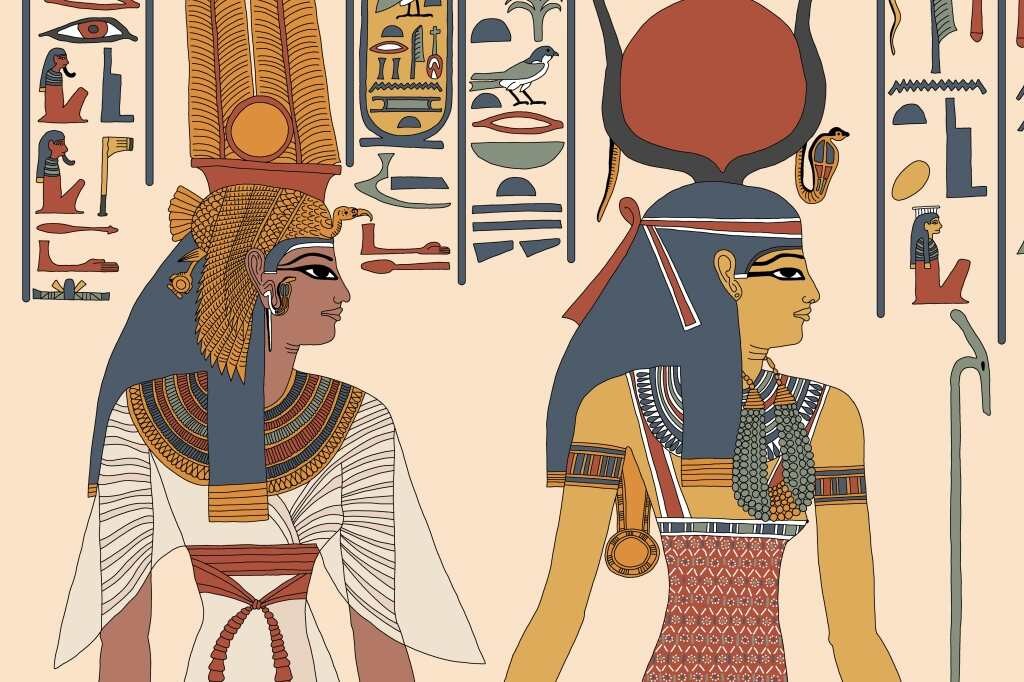
Queen Nefertari was admired for her beauty and elegance, often depicted in ancient paintings wearing fine jewelry and elegant clothing. Along with this, she was recognized for her powerful position at court and it is thought that she was the one who assisted Ramesses II in political and diplomatic affairs.
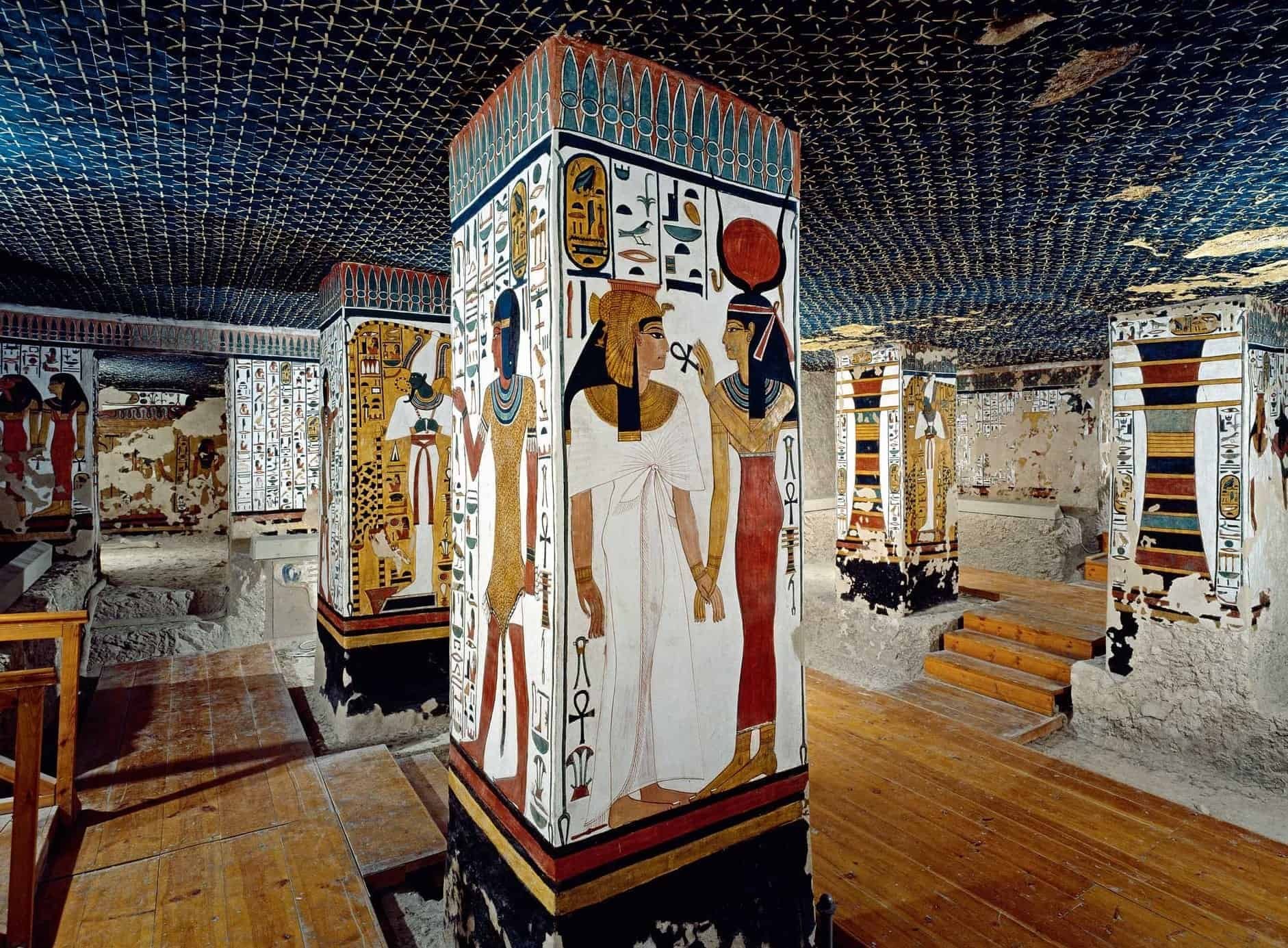
Nefertari passed away around 1240 BCE. Although Ramses II later married other women, none held the same place in his heart. To honor her memory, he built her an extraordinary tomb in the Valley of the Queens, which remains one of the most beautiful tombs in Luxor.
Queen Nefertari was highly respected during her lifetime, not only as a queen but also as a strong political and religious figure. She held many prestigious titles that reflected her importance in ancient Egyptian society.
Among her titles were “The Great Royal Wife,” “Lady of the Two Lands,” “Beloved of Amun,” “Mistress of Upper and Lower Egypt,” “Daughter of Ra,” and “God’s Wife.” These titles highlight her high status and spiritual role.
She was frequently depicted in statues and temple reliefs as a graceful and youthful queen. Ramses II is believed to have described her as the most beautiful woman of all. Her image appears clearly at Abu Simbel, where statues show her dressed in detailed royal garments.
Queen Nefertari Queen Nefertari was an incredibly powerful and influential woman in ancient Egypt. She became the political and religious consort of Ramses II and thus directly influenced royal policy. To the south of Egypt, close to the border with Sudan, Ramses II built the Temple of Abu Simbel as a tribute to her.It was adorned with colossal figures of the king next to the queen and their kids, She is depicted alongside Ramses II and their children, with equal prominence in the reliefs, showcasing her importance. The interiors narrate through paintings divine events, gift givings, and occasions of the royal family life. This temple remains a powerful symbol of Nefertari importance and the deep respect Ramses II had for her.
The tomb of Queen Nefertari is deemed to be one of the most beautiful and the most carefully kept burial spots of the entire ancient Egypt. The tomb situated in the Valley of the Queens is a mirror to the high rank of the queen and her strong bond with the religion and the afterlife. Nefertari was also honored as the one who brought about changes in the decoration and architecture in the cultural and monumental fields.
The tomb’s walls are decorated with the very finest surviving art of ancient Egypt. The brightly colored reliefs show her life, religious ceremonies, and parts of the sacred texts that were to help her in her afterlife journey. Inside the tomb, sculptures show Queen Nefertari as a queen, a mother, and a goddess.
Visiting Queen Nefertari’s tomb offers a meaningful look into the art, beliefs, and spiritual world of ancient Egypt. Her legacy continues to inspire those interested in Egypt history and monuments, often highlighted in cultural content related to Egypt tours.
Start From: 2250$
Start From: 5600$
Start From: 7500$
Start From: 9720$
Start From: 5550$
Start From: 9185$
Start From: 325$
Start From: 3210$
Start From: 140$
Find out our latest news, promotions, and professional tips. Know before you book your next Egypt tours
Queen Nefertari was the Great Royal Wife of Pharaoh Ramses II and one of the most influential queens of ancient Egypt.
Queen Nefertari is buried in Tomb QV66 in the Valley of the Queens, located near Luxor, Egypt.
Ramses II built the temple at Abu Simbel to honor Queen Nefertari and show his respect for her importance as his wife and queen.
Her tomb is famous for its beautifully preserved wall paintings, detailed artwork, and exceptional artistic quality.
Yes, visitors can access the tomb when it is open, usually with limited entry to protect the ancient artwork.
Queen Nefertari continues to be admired more than 3,000 years after her lifetime because of her beauty, intelligence, influence, and remarkable legacy.