A Journey Through 2,300 Years of History, Mythology, and Civilizations.
Some cities preserve their history in museums.
And there are cities where history still lives beneath your feet. Alexandria belongs to the second kind.
Standing along the Mediterranean coast, Alexandria is often remembered for its sea, its corniche, and its famous library. Yet beyond the waves lies a far deeper story, a story carved into tombs, temples, forgotten sanctuaries, and underground passageways.
Few places on Earth allow visitors to walk through more than twenty-three centuries of uninterrupted history in a single journey.
In Alexandria, every layer of the city reveals a different civilization.
And generations of scholars sought to understand the world from here.
The city's cemeteries and necropolises are not merely places of burial. They are historical archives written in stone, revealing how different cultures understood life, death, eternity, and knowledge itself.
To understand Alexandria's tombs, one must first understand the city itself.
The story begins in 331 BC.
A young Macedonian conqueror named Alexander the Great (Ἀλέξανδρος ὁ Μέγας ) arrived in Egypt after a series of military victories that changed the ancient world.
Unlike many rulers who simply conquered territories, Alexander envisioned something larger.
He wanted a city that would connect civilizations.
A city where East would meet West.
A city where commerce, culture, and knowledge could flourish together.
On a narrow strip of land between the Mediterranean Sea and Lake Mareotis, he founded Alexandria.
Although Alexander would never live long enough to see his city reach greatness, his vision would transform history.
After his death, Egypt came under the rule of the Ptolemies, who turned Alexandria into the intellectual capital of the ancient world.
The First Great Research Institution
Long before modern universities existed, Alexandria established something remarkable. It was known as the Mouseion (Μουσεῖον) .
The word comes from the Greek "Muses," the divine patrons of knowledge and creativity.
The Mouseion (Μουσεῖον) was far more than a temple.
It functioned as a research center, academy, library, and scientific institution combined.
Scholars lived there permanently.
They received salaries from the state.
They were provided with accommodation, food, lecture halls, gardens, laboratories, and research spaces.
For many historians, it represents one of the earliest organized research institutions in human history.
Within its halls, scholars discussed astronomy, medicine, mathematics, literature, philosophy, geography, and engineering.
The modern word "museum" ultimately traces its origins back to this extraordinary institution.
Guardians of Knowledge and Inspiration
The Mouseion (Μουσεῖον) was dedicated to Αἱ ἐννέα Μοῦσαι (the Nine Muses ) of Greek mythology.
These divine figures represented every branch of artistic and intellectual achievement.
Each Muse inspired a different discipline:
To the ancient Greeks, knowledge was not merely acquired.
It was inspired.
Every discovery was considered a gift from the divine world.
And nowhere embodied that belief more fully than Alexandria.
The divine patrons of knowledge, arts, music, poetry, history, and astronomy, the Mouseion of Alexandria became one of the greatest centers of learning in the ancient world.
It’s Humanity’s Greatest Collection of Knowledge
Beside the Mouseion stood the most famous library ever created. The ancient Library of Alexandria. Its ambition was breathtaking.
To gather all human knowledge under one roof.
Books and scrolls arrived from every corner of the known world.
Ships entering Alexandria's harbor were reportedly inspected for manuscripts.
The library became a magnet for scholars from Greece, Egypt, Persia, India, and beyond.
For centuries, Alexandria was the intellectual center of civilization.
Within Alexandria worked some of the greatest minds in history.
His work on geometry became the foundation of mathematics for more than two thousand years.
Using shadows and mathematics alone, he calculated the circumference of the Earth with astonishing accuracy.
Nearly 1,800 years before Copernicus, he proposed that the Earth revolved around the Sun.
One of the earliest pioneers of anatomy and medical science.
Their discoveries shaped the world we live in today.
And all of them worked within Alexandria's remarkable intellectual environment.
A God Designed to Unite Civilizations
As Alexandria grew, the Ptolemies faced a challenge.
How could they unite Greek settlers and native Egyptians under a single cultural identity?
Their answer was (Σάραπις) Serapis.
Serapis was a unique deity created by combining elements of Egyptian and Greek religious traditions.
Σάραπις (Serapis)→ A Greco-Egyptian deity created during the Ptolemaic period to unite Greek and Egyptian religious traditions. Serapis combined the characteristics of Osiris and Apis with aspects of Greek gods such as Zeus and Hades, becoming one of the most important deities of Alexandria
He incorporated aspects of:
Osiris
Apis
Zeus
Hades
The result was a god accepted by both cultures.
To honor him, the rulers built the magnificent Serapeum of Alexandria.
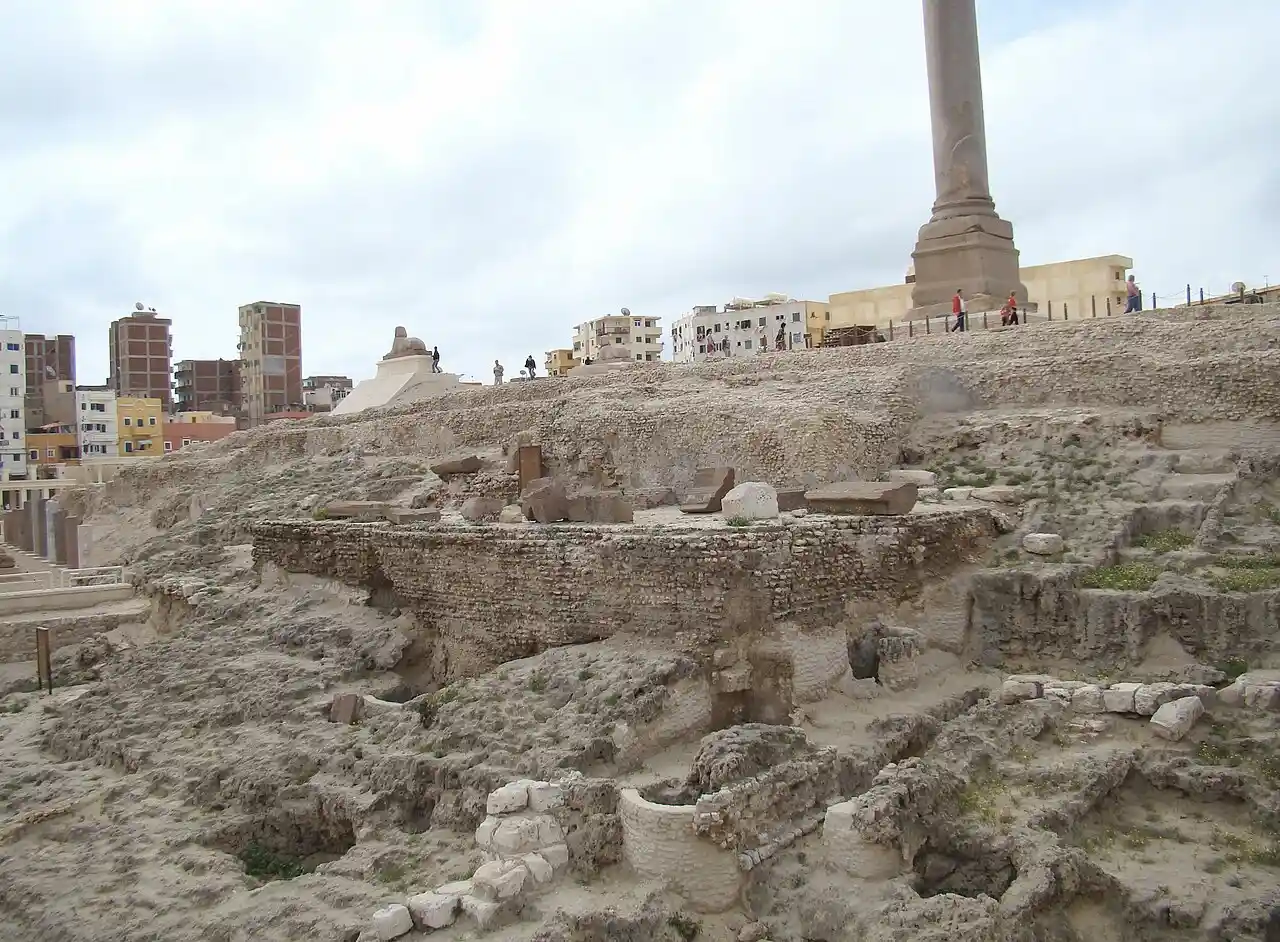
Σεραπείον (Serapeum )→ was the grand temple dedicated to Serapis in Alexandria. It served not only as a religious center but also as a major cultural and intellectual institution that housed a famous daughter library associated with the Great Library of Alexandria. The Serapeum became one of the most magnificent monuments of the ancient Mediterranean world before its destruction in the late 4th century AD.
Let's talk about them in detail now :
When Alexander the Great died in 323 BC, his vast empire was divided among his generals. Egypt fell into the hands of Ptolemy I Soter, a man who quickly realized that ruling Egypt would not be easy.
Alexandria was growing into a magnificent city, but beneath its prosperity lay a challenge. The Egyptians and the Greeks lived side by side, yet they belonged to different worlds.
The Egyptians worshipped ancient gods whose stories stretched back thousands of years. They honored Osiris, lord of the afterlife, and revered Apis, the sacred bull who symbolized divine power and fertility.
The Greeks, meanwhile, looked to Ζεύς (Zeus), king of the gods, and ᾍδης (Hades), ruler of the Underworld. Their temples, myths, and traditions were entirely different.
Ptolemy understood that if Alexandria was to become the capital of a new kingdom, its people needed something that could bring them together.
And so one of the most ambitious religious projects of the ancient world was born.
A new god emerged: Σάραπις (Serapis).
He was carefully designed to speak to both cultures at once. To the Egyptians, he carried the spirit of Osiris and Apis. To the Greeks, his appearance resembled the powerful and noble gods they already knew. He was familiar, yet new. Different, yet recognizable.
For the first time, Egyptians and Greeks could stand before the same deity.
But every great god needed a great home.
And Alexandria would give Serapis one unlike anything the Mediterranean had ever seen.
Rising above the city stood the magnificent Σεραπείον (Serapeum).
Its towering columns could be seen from afar. Pilgrims climbed its steps. Priests performed sacred rituals within its halls. Philosophers debated ideas beneath its shadows. Scholars walked its courtyards carrying scrolls and knowledge gathered from across the known world.
The Serapeum became far more than a temple.
It was a symbol of Alexandria itself.
Some ancient writers even described it as one of the most impressive sanctuaries in the ancient world, second only to a few of the greatest monuments of antiquity.
For centuries, the Serapeum stood as a reminder of Alexandria's unique identity. It reflected a city that refused to belong to a single culture and instead chose to become a meeting place for civilizations.
Situated on a high hill overlooking the city, the Serapeum became one of the largest religious complexes in the Mediterranean. But it was more than a temple.
It also housed a major branch of Alexandria's library system.
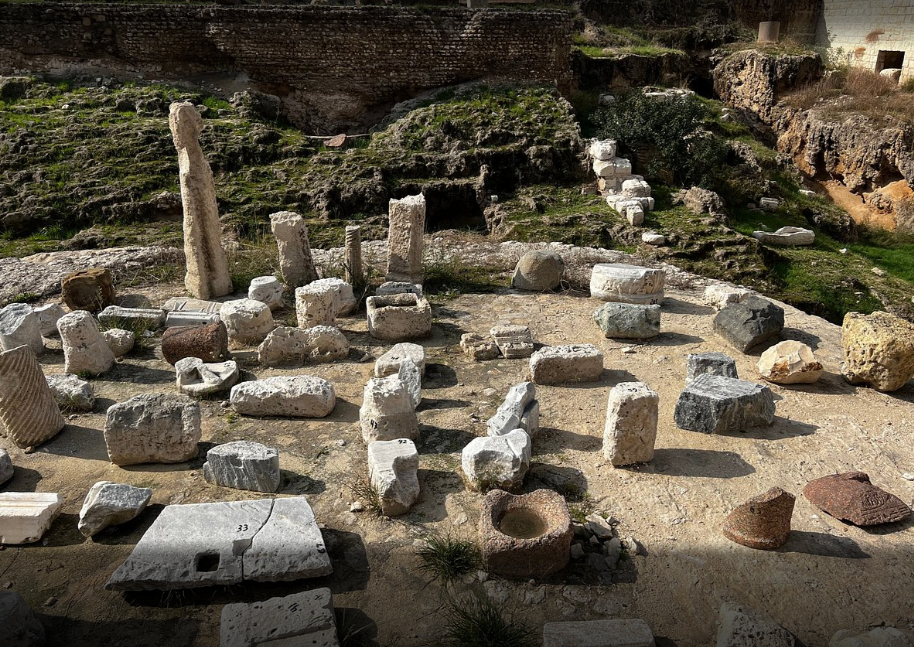
Ultimately, Σάραπις (Serapis) and the Σεραπείον (Serapeum) stood at the heart of Alexandria's multicultural identity. Together, they represented the Ptolemaic dream of harmony between Egyptian and Greek civilizations. Serapis served as a divine symbol of unity, while the Serapeum became a magnificent sanctuary where religion, philosophy, and knowledge flourished side by side, shaping Alexandria into one of the most influential cities of the ancient world. Today, only fragments remain.
A solitary column rises toward the sky, and scattered stones hint at the grandeur that once existed.
Yet the idea behind Serapis and the Serapeum never truly disappeared.
It survives in the story of Alexandria itself, a city built on the belief that different cultures, traditions, and people could come together to create something greater than any one of them could achieve alone.
The Earliest Alexandria Beneath the Ground
Centuries later, another chapter of Alexandria's story emerged.
Hidden beneath modern Alexandria lies the ancient Chatby Necropolis.
Dating back to the late fourth century BC, it is one of the oldest burial grounds in the city.
These tombs belonged largely to the Greek settlers who arrived after Alexander's conquest.
Their architecture reflected pure Hellenistic traditions.
Columns, ceremonial halls, and funerary chambers reveal how Alexandria's earliest inhabitants understood death.
Unlike Egyptians, some Greeks practiced cremation.
Ashes were placed in urns and preserved within carefully designed burial spaces.
The necropolis offers one of the clearest windows into the earliest days of Alexandria itself.
Death in Greek culture was not considered an end.
It was a journey.
A soul entering the afterlife encountered a series of legendary figures.
Hades (ᾍδης)
Hades ruled the realm of the dead. He governed a kingdom hidden beneath the Earth.
Persephone ( Περσεφόνη)
Persephone symbolized the cycle of life, death, and rebirth.
Charon (Χάρων)
Charon transported souls across the River Styx . For this reason, coins were often buried with the deceased.
Cerberus (Κέρβερος)
Cerberus guarded the gates of the underworld and prevented souls from escaping.
These myths deeply influenced burial customs throughout the Greek world, including Alexandria.
This is the place Where Three Civilizations became one
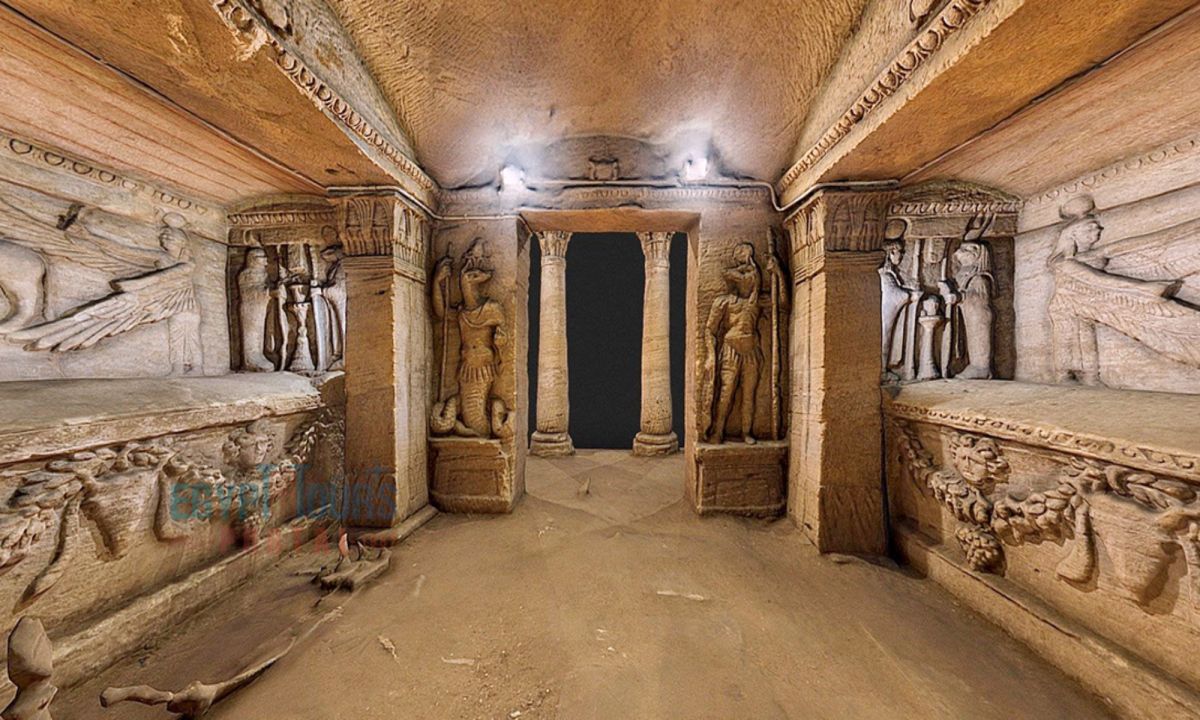
No site illustrates Alexandria's cultural fusion better than the famous Catacombs of Kom El Shoqafa.
Dating to the second century AD, these underground catacombs began as a family tomb before expanding into a vast burial complex.
Descending into Kom El Shoqafa feels like entering another world.
Spiral staircases lead downward into chambers illuminated only by filtered light.
Every wall tells a story.
But the most remarkable aspect is not the architecture.
It is the cultural fusion.
Egyptian gods appear dressed in Roman clothing.
Greek artistic styles merge with Egyptian religious beliefs.
Roman decorative elements surround traditional Egyptian symbols of eternity.
The result is one of the most extraordinary examples of cultural blending in the ancient world.
Anubis, Medusa, and the Guardians of the Dead
Inside Kom El Shoqafa, visitors encounter symbols from multiple civilizations.
Anubis
Anubis appears wearing Roman military attire.
A powerful symbol of cultural integration.
Medusa (Μέδουσα )
Medusa appears as a protective figure.
Ancient Greeks believed her image could ward off evil.
Agathodaemon (Ἀγαθοδαίμων)
Agathodaemon, often represented as a sacred serpent, symbolized prosperity and protection.
Together, these figures reveal how Alexandria absorbed influences from every civilization that touched its shores.
The Greek Cemeteries of Modern Alexandria
Fast forward nearly two thousand years.
Alexandria entered a new golden age during the nineteenth and early twentieth centuries.
The city became one of the Mediterranean's most cosmopolitan ports.
Among its largest communities were the Greeks.
Successful merchants, bankers, industrialists, and shipping magnates built prosperous lives in Alexandria.
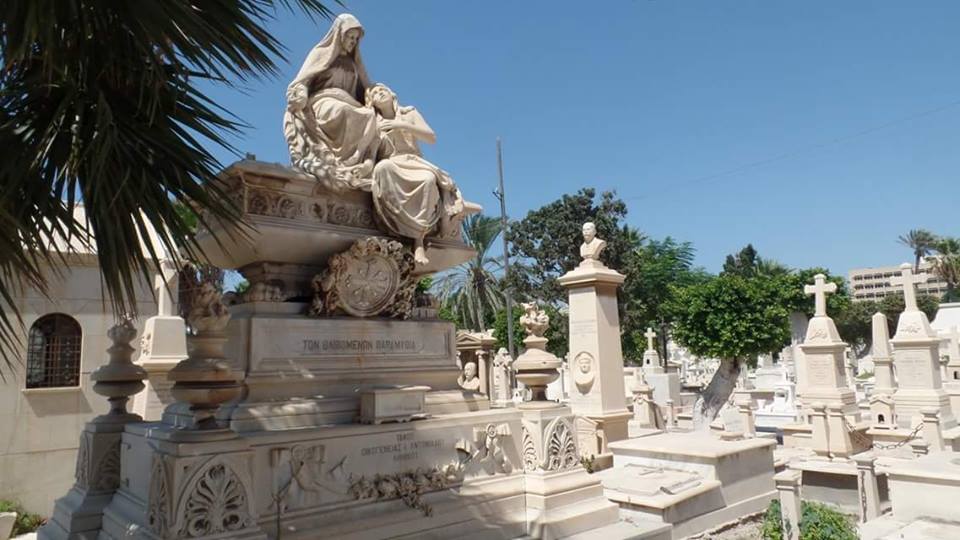
Their final resting place became the beautiful Greek cemeteries of Chatby.
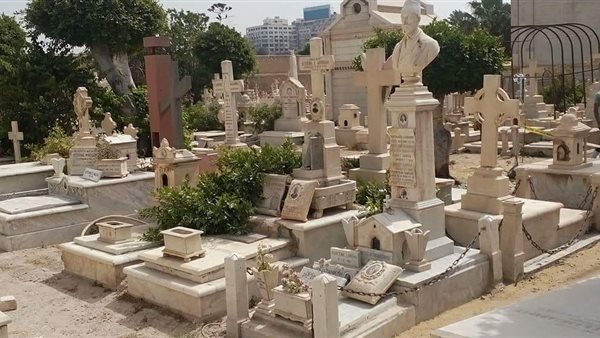
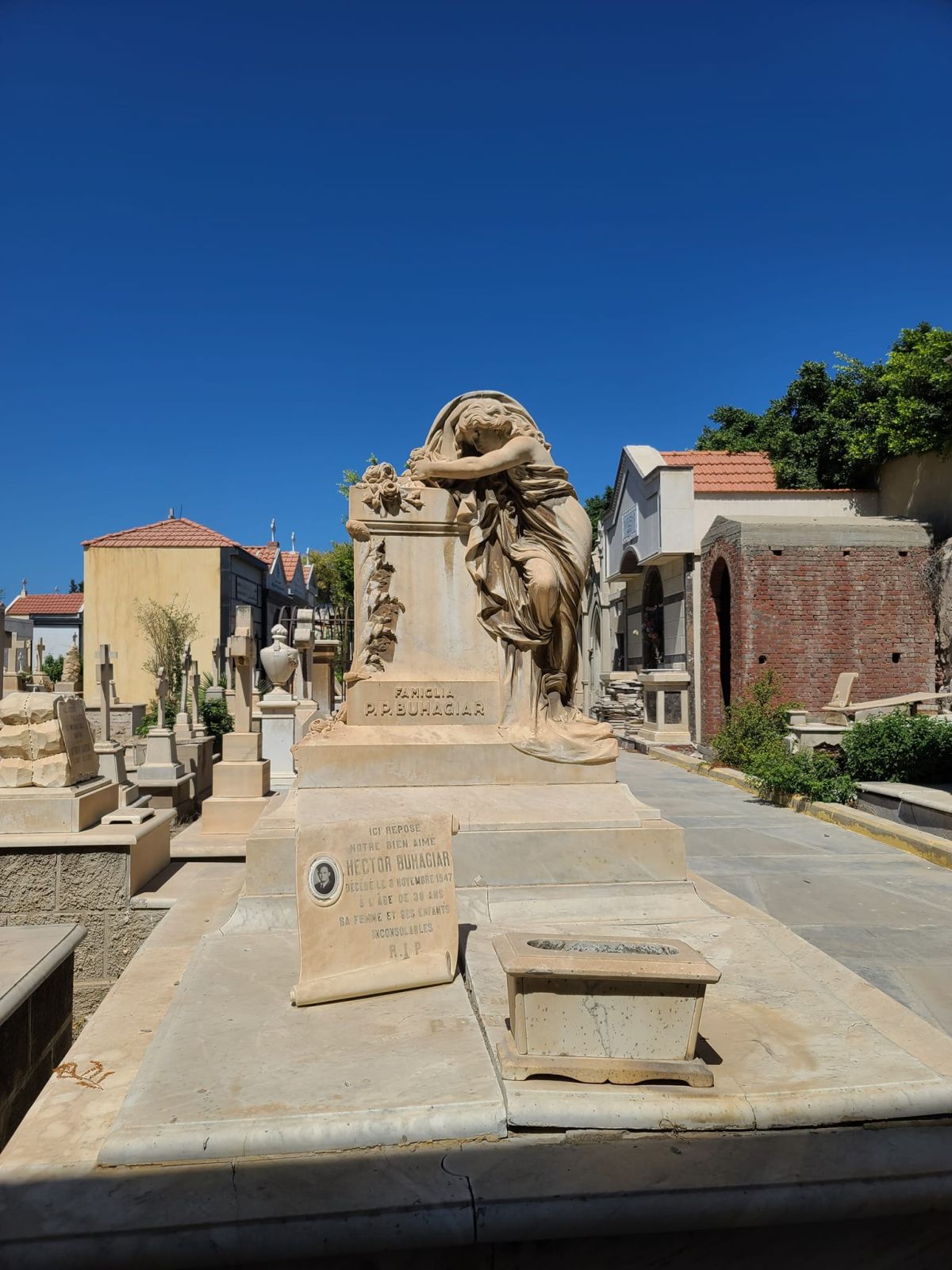
Every monument reflects the wealth and sophistication of Alexandria's Greek community.
Constantine Cavafy and the Soul of Alexandria
Among the most famous figures associated with Alexandria is Constantine P. Cavafy.
His poetry captured the city's unique atmosphere better than perhaps anyone else.
Through his verses, ancient kings, forgotten heroes, philosophers, and ordinary citizens came back to life.
For Cavafy, Alexandria was never merely a city.
It was a living conversation between past and present.
His works continue to inspire readers around the world.
It is Europe’s Legacy on Egyptian Soil
Near the Greek cemeteries stand the Latin Catholic cemeteries.
These burial grounds belong largely to Italian, French, and other Catholic communities that once called Alexandria home.
Here visitors find:
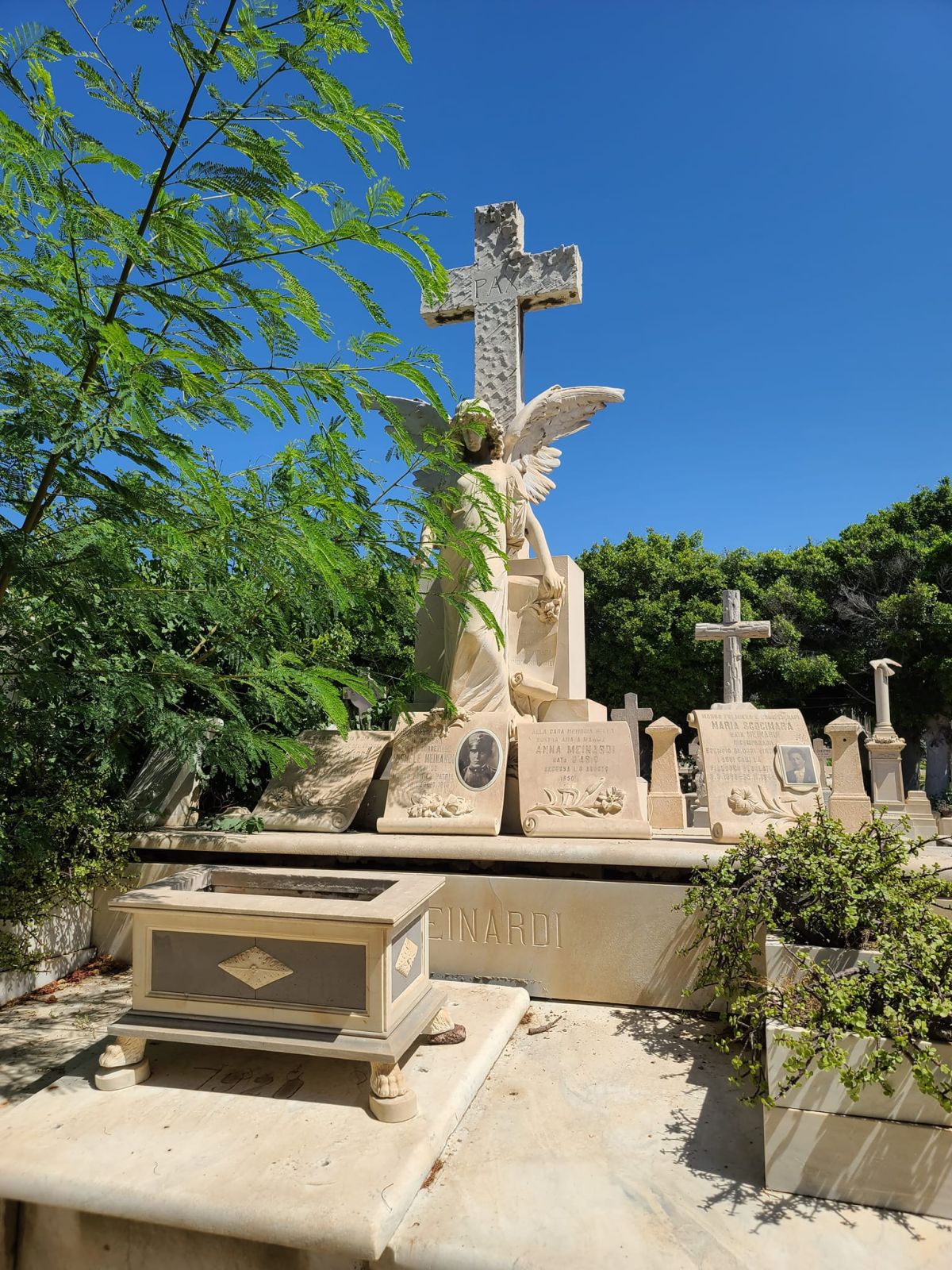
The atmosphere feels closer to Rome or Paris than modern Egypt.
Yet they remain unmistakably Alexandrian.
A reminder of the city's extraordinary diversity.
Alexandria's history did not stop with antiquity.
During both World Wars, the city served as a crucial military and naval center.
Today, military cemeteries preserve the memory of soldiers from Britain, Australia, New Zealand, and other Commonwealth nations.
These quiet landscapes tell a different story.
Not one of mythology.
But of sacrifice, remembrance, and modern history.
Perhaps this is Alexandria's greatest secret.
It has always existed somewhere between history and legend.
In Alexandria, mythology is never far from reality.
A visitor may spend the morning exploring Greek legends of Hades and Persephone, the afternoon descending into Roman catacombs guarded by Anubis and Medusa, and the evening reading poetry inspired by a city that has never stopped reinventing itself.
Few places offer such an experience.
Constantine P. Cavafy. Κωνσταντίνος Πέτρου Καβάφης
Who is Cavafy? let’s discuss in detail
The Poet Who Refused to Let Alexandria Die
The scholars of the Mouseion became names in ancient manuscripts.
Yet Alexandria never truly vanished.
In the late nineteenth century, a quiet figure walked the same streets where Greeks, Romans, Egyptians, philosophers, merchants, and kings had once passed.
His name was Κωνσταντίνος Πέτρου Καβάφης (Constantine P. Cavafy).
Born in Alexandria in 1863, Cavafy spent most of his life in the city. Unlike many writers who looked toward the future,
he looked backward toward the forgotten world that had once made Alexandria the intellectual capital of the Mediterranean.
When he walked through Alexandria, he did not see ordinary streets. He saw the shadows of kings and queens, philosophers and generals. He imagined the final days of the Ptolemies, the ambitions of rulers, the triumphs of armies, and the quiet tragedies hidden behind palace walls.
Through his poetry, ancient Alexandria came back to life.
The Kings, Queens, and Heroes of His Poetry
Many of Cavafy's most celebrated poems were inspired by figures connected to Alexandria and the Hellenistic world.
He wrote about:
- Κλεοπάτρα (Cleopatra), the last queen of Ptolemaic Egypt.
- Μάρκος Αντώνιος (Mark Antony), whose fate became intertwined with Alexandria.
- Πτολεμαῖος (Ptolemy) and the rulers of the Ptolemaic dynasty.
- The princes, scholars, and politicians who shaped the city's destiny.
One of his most famous poems, The God Abandons Antony, recreates the dramatic final hours before Alexandria fell to Octavian. Rather than describing a military defeat, Cavafy transformed the event into a deeply human reflection on dignity, loss, and acceptance.
Reading the poem feels less like studying history and more like standing beside Antony as an era comes to an end.
Ithaca: A Journey Beyond Geography
Among all his works, none became more famous than Ιθάκη (Ithaka).
Inspired by Ὀδυσσεύς (Odysseus) and his legendary journey home after the Trojan War, the poem teaches that the true value of life lies not in the destination, but in the experiences gathered along the way.
For many travelers, Ithaka has become one of the most beloved poems ever written because it transforms an ancient Greek myth into a timeless lesson about life itself.
As Alexandria grew into a crossroads of civilizations, the stories of Greek mythology traveled with it.
Among the most influential were:
Ζεύς (Zeus)
The king of the Olympian gods and ruler of the heavens.
Ancient legends even claimed that Alexander the Great was the son of Zeus, reinforcing the idea that his destiny was guided by divine power.
Ἅιδης (Hades)
Lord of the Underworld and ruler of the realm of the dead.
Beliefs surrounding Hades influenced many Greek funerary traditions that later appeared in Alexandria's earliest cemeteries, including the Chatby Necropolis.
Περσεφόνη (Persephone)
Queen of the Underworld and daughter of Demeter.
Her annual return from the realm of Hades became a powerful symbol of rebirth, renewal, and the eternal cycle of life and death.
Μέδουσα (Medusa)
Perhaps the most famous protective figure in Greek mythology.
Her image frequently appeared on tombs, temples, and monuments throughout the Greek and Roman world because it was believed to ward off evil and protect sacred places.
Ἀγαθοδαίμων (Agathodaemon)
The sacred serpent spirit is associated with Alexandria itself.
Considered a guardian of the city, Agathodaemon symbolized prosperity, protection, wisdom, and good fortune. His image appeared on coins, sculptures, and religious monuments throughout Alexandria's history.
When Cavafy died in 1933, he remained where he had always belonged.
Today, he is buried in the Greek Orthodox Cemetery of Chatby in Alexandria.
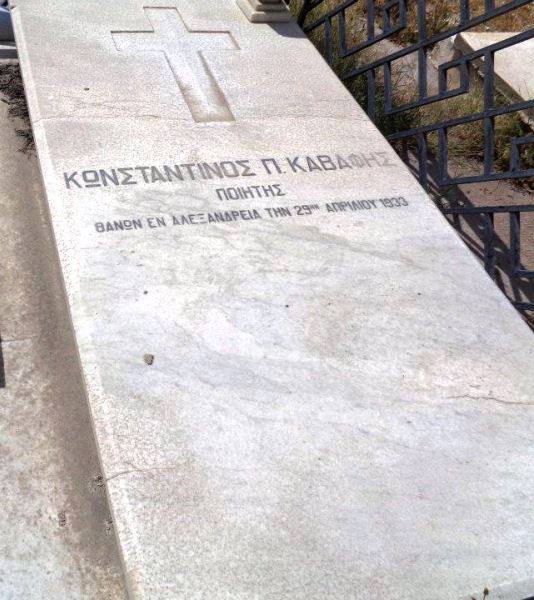
Not far from the ancient necropolises, the Roman catacombs, and the memories of the Hellenistic city that inspired his poetry, the poet rests within the same city that shaped his imagination.
It is a fitting ending.
While kings built Alexandria, scholars filled its libraries, and priests raised its temples, it was Cavafy who ensured that its stories would never be forgotten.
Through his words, Alexandria continues to live not only in stone, but in memory.
It is The Return of a Dream
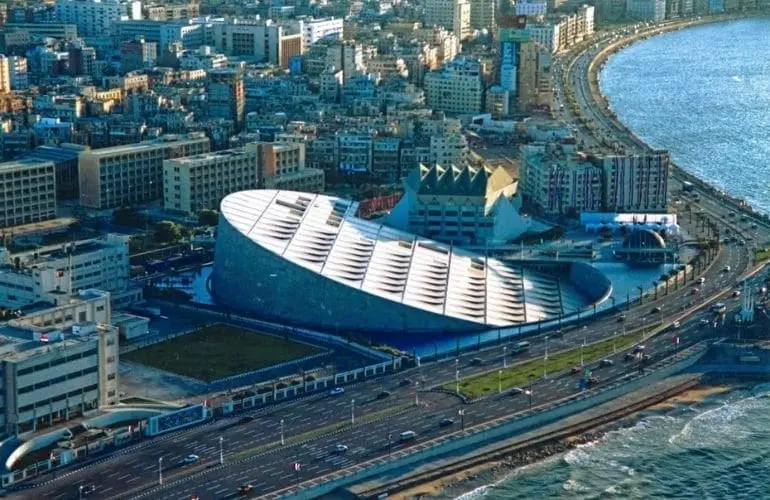
After centuries of loss, Alexandria witnessed the rebirth of its most famous symbol.
In 2002, the modern Bibliotheca Alexandrina opened its doors.
Designed as a massive sun disk rising from the Mediterranean, the building symbolizes the rebirth of knowledge.
Today it houses:
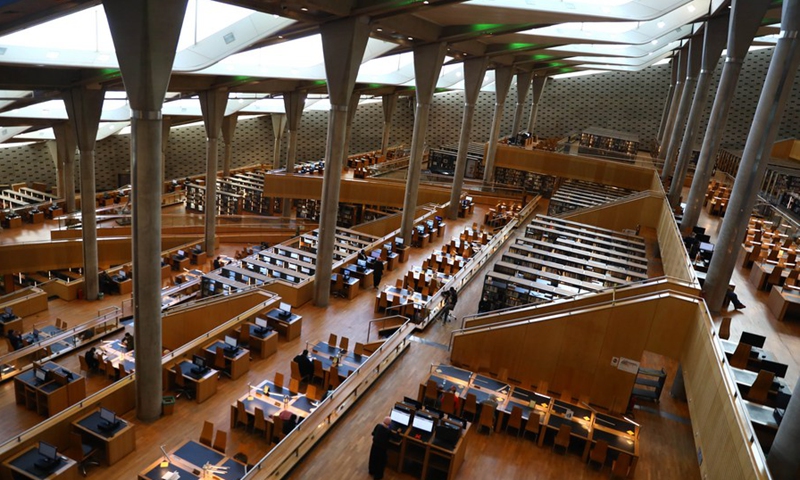
The mission remains remarkably similar to that of the ancient library.
In many ways, the spirit of ancient Alexandria lives again within its walls.
To walk through Alexandria is to travel across more than twenty-three centuries of human history.
From the dreams of Alexander the Great to the scholars of the Mouseion, from the vanished shelves of the ancient Library to the grandeur of the Serapeum, from the Hellenistic tombs of Chatby to the underground wonders of Kom El Shoqafa, every corner of the city reveals another chapter of a story that never truly ended.
Its necropolises and cemeteries are far more than burial grounds. They are monuments to the civilizations that shaped the Mediterranean world, preserving the beliefs, art, aspirations, and memories of countless generations.
And perhaps that is what makes Alexandria so extraordinary.
It is a city where philosophers and poets, kings and merchants, saints and soldiers, myths and facts all continue to exist side by side.
Few destinations allow visitors to experience the rise of empires, the evolution of faith, the pursuit of knowledge, and the meeting of cultures in a single journey.
Alexandria does.
And that is why, after more than two millennia, it remains not only one of the most historically significant cities in the world, but also one of its most fascinating.
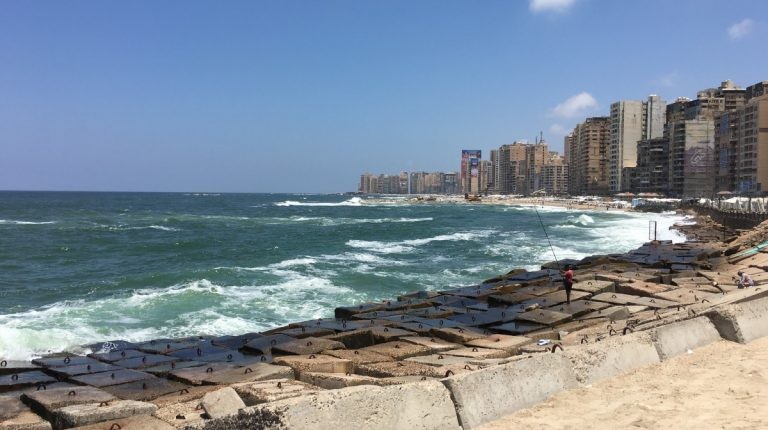
As your time in Alexandria comes to an end, you may find yourself standing by the Mediterranean one last time, watching the waves roll against the city's historic shoreline. And in that quiet moment, you realize that what you experienced was far more than sightseeing.
This was a journey through more than 2,300 years of human history.
From descending into the mysterious Catacombs of Kom El Shoqafa, where Egyptian, Greek, and Roman traditions merged into a single extraordinary monument, to exploring the ancient necropolis of Chatby, one of the earliest burial grounds of Hellenistic Alexandria, every stop revealed a different chapter of the city's remarkable story.
You walked among the elegant Greek and Latin cemeteries that preserve the memory of Alexandria's cosmopolitan golden age. You followed the traces of philosophers, poets, merchants, rulers, and generations of people who helped shape one of the most fascinating cities the world has ever known.
A day in Alexandria can begin among ancient tombs and archaeological treasures, continue through stories of gods, scholars, and emperors, and end with a peaceful sunset over the Mediterranean from the comfort of a luxury hotel. Whether staying at the renowned Four Seasons Alexandria at San Stefano, the historic Windsor Palace Hotel, or other carefully selected properties, every detail of the experience can be designed around comfort, authenticity, and elegance.
At Egypt Tours, we believe that great travel is not simply about visiting places. It is about understanding them.
That is why our Alexandria experiences are thoughtfully crafted to connect travelers with the city's deeper stories. Through our trusted relationships with leading hotels, expert guides, and local partners, we create journeys that are seamless, enriching, and entirely personalized.
Imagine spending the morning uncovering the secrets of Kom El Shoqafa, the afternoon exploring the legacy of ancient Alexandria, and the evening reflecting on everything you have learned beside the sea. It is a journey that moves effortlessly between archaeology, mythology, culture, and history, bringing together centuries of civilization in a way that feels both meaningful and unforgettable.
With Egypt Tours, Alexandria is not simply a destination on an itinerary.
It becomes a living story.
A story of Alexander the Great and the Ptolemies. A story of scholars and poets. A story of ancient beliefs, magnificent monuments, and cultures that met and flourished on the shores of the Mediterranean.
And long after your journey ends, it is not the dates or the monuments you will remember most.
It is the feeling of walking through a city where every stone has a story, every monument preserves a memory, and every corner reveals another layer of one of history's greatest civilizations.
Alexandria is more than a place to visit.
It is a story waiting to be experienced.
And Egypt Tours is honored to help you discover it.
Find out our latest news, promotions, and professional tips. Know before you book your next Egypt tours
Egypt has many historical sites that you can visit and enjoy. Each tour is different and unique. If you go on a Nile cruise, you can visit Abu Simbel, Aswan, and Luxor in the South and enjoy the temples, tombs, and the treasures of the Nile. In the North, enjoy the Pyramids of Giza, The Egyptian Museum, Sakkara. Mosques, churches in Cairo, and many landmarks located in the city of Alexandria. On the East, Enjoy a beach tour for diving, snorkeling, and swimming in the Red sea. Every city has its charm, history, and flavor where you can do many tours and activities.
Your Egypt Tours is one of Egypt’s leading and most trusted travel agencies, known for its personalized service and expert care. As a top-rated company for Egypt tour packages, we ensure every Egypt trip is safe, seamless, and unforgettable, offering competitive prices, excellent customer service, and the highest standards of quality. With us, you’re always in good hands.
The average cost of a one-week trip in Egypt is around 1600 USD, including visits to tombs, temples, and a Nile cruise. Prices vary depending on the Egypt tours and the level of luxury you choose.
It’s not recommended to drink tap water in Egypt, as it’s highly chlorinated and may cause stomach issues for travelers. During your Egypt tours, it’s best to drink bottled water and use tap water only for washing or brushing your teeth.
The best time to enjoy Egypt tours is from September to March, when the weather is mild and pleasant. During these months, temperatures are ideal for sightseeing and Nile cruises. Summer (May to September) can be very hot, but it’s also a good time for budget travelers.
Egypt is generally hot and sunny most of the year, with winter falling between November and January, and summer peaking from June to August. Winters are mild, while summers can get very hot, especially in Luxor and Aswan. The pleasant weather from September to March makes it the best time to enjoy Egypt tours and explore the country's top attractions comfortably.
Yes, Egypt is a very safe country to visit, with a low crime rate and strong security measures in all tourist areas. The government ensures that accommodations and attractions remain clean and well-monitored for travelers’ comfort. When you book Egypt tours, you’ll find professional guides and organized arrangements that make your trip worry-free and enjoyable.
Egypt offers adventures for every traveler. Explore the majestic Pyramids of Giza, sail along the Nile on a Luxury cruise between Luxor and Aswan, and discover ancient temples and tombs that tell the story of the Pharaohs. Dive or snorkel in the Red Sea at Hurghada and Sharm El Sheikh, or enjoy a relaxing beach escape. Book one of our Egypt tours to experience the perfect mix of history, culture in one unforgettable journey.
Yes, you can, summer is still a great time to explore Egypt! While temperatures can rise to around 45°C, seaside resorts like Hurghada, Sharm El Sheikh, and Marsa Alam offer refreshing escapes with diving and snorkeling opportunities. Sightseeing in the early morning or evening helps you avoid the midday heat. Summer also brings great deals on hotels and services, making it ideal for travelers on a budget. Whether you’re seeking relaxation or adventure, Egypt tours during summer can still be an enjoyable and memorable experience.
Egypt has a modest dress code, especially for women, since it’s a Muslim country. Light, comfortable clothing is fine, but avoid short shorts or skirts. When visiting religious sites, cover your shoulders and knees. During Egypt tours, you can dress casually and comfortably; formal wear is optional unless you want to make your Nile cruise dinner extra special.
You can easily obtain a visa upon arrival at Cairo Airport, the process is simple for USA, UK, Canadian, Australian, and European citizens. The visa costs $25 USD and can be purchased at the visa office before immigration. You can also apply for an E-Visa through the official portal: www.visa2egypt.gov.eg. During your Egypt tours, our team can assist you with all visa-related inquiries to make your arrival smooth and stress-free.
Your Egypt Tours travel agency recommends two weeks so that you can enjoy the temples and tombs of Luxor and Aswan, explore the sights of Cairo, and relax in the Red Sea islands and nature reserves.
The best Egypt Nile River cruise depends on your preferences, budget, and how many nights you wish to spend on board. For a truly unforgettable experience, we recommend a 5-star luxury Nile cruise that offers exceptional comfort and service. If you prefer a more private and intimate journey, choose a Dahabiya Nile cruise, ideal for small groups of around 15 people. For adventurous travelers, the traditional Felucca boats provide a simple and authentic way to sail the Nile during your Egypt tours, though they offer fewer amenities.
The best time to visit Egypt is generally from October to April where it is suitable for outdoor activities and sightseeing.
Egypt travel usually have guided tours to archaeological sites, museums, and historical landmarks. Also have optional activities may include hot air balloon rides over Luxor, snorkeling in the Red Sea, or desert safaris.